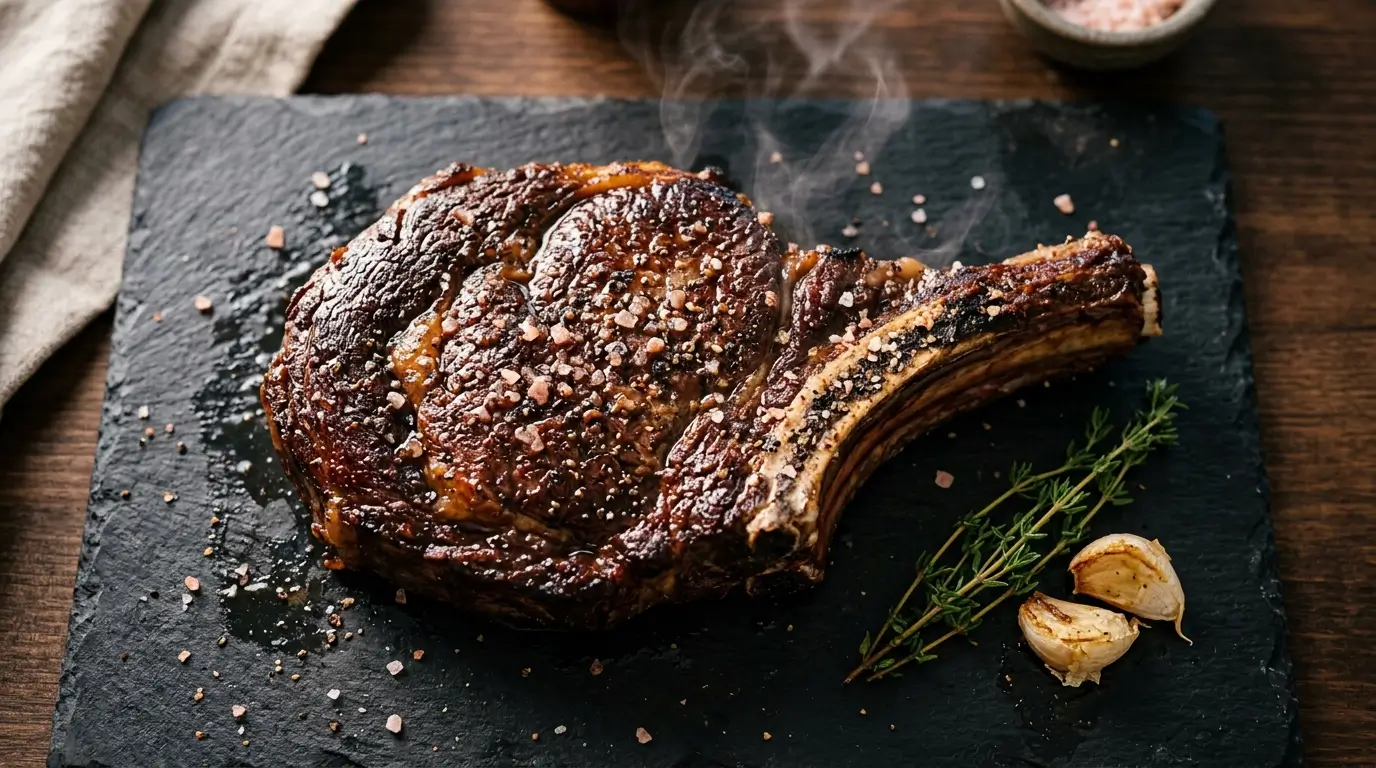
A thick ribeye coated in coarse pink Himalayan salt and seared in a screaming-hot cast iron skillet delivers a crust you would pay restaurant prices for — and it takes about 25 minutes from refrigerator to plate. This is the pink salt steak recipe that makes the case for keeping a jar of coarse Himalayan salt next to your stove at all times.
Ingredients
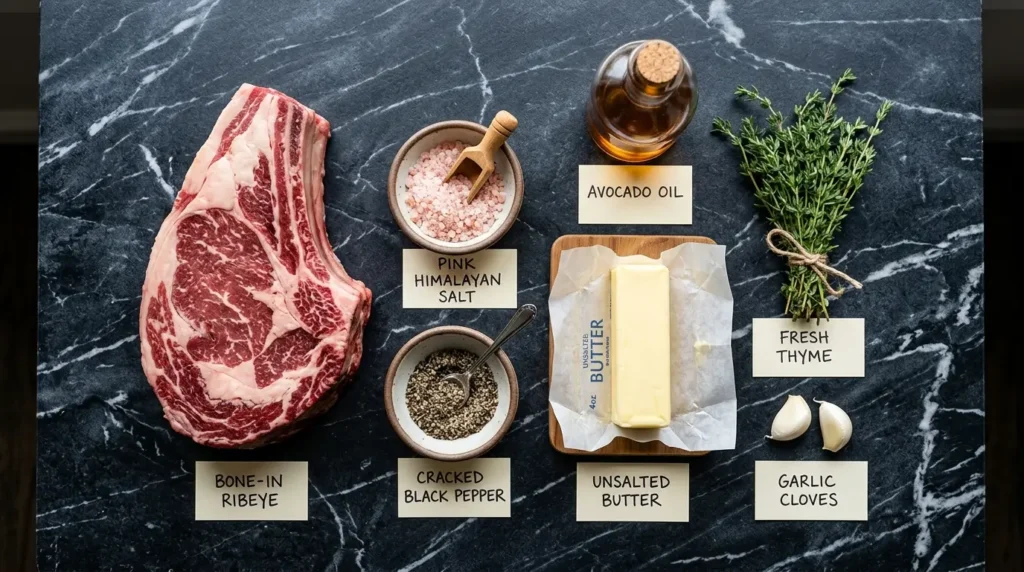
(Serves 2)
- 1 bone-in ribeye steak, 1¼ to 1½ inches thick (about 14–16 oz)
- 1½ teaspoons coarse pink Himalayan salt (see notes on grain size below)
- ½ teaspoon coarsely cracked black pepper
- 1 tablespoon neutral oil with a high smoke point (avocado or grapeseed)
- 2 tablespoons unsalted butter
- 2 garlic cloves, lightly crushed
- 2 sprigs fresh thyme
Equipment
- 12-inch cast iron skillet
- Instant-read meat thermometer
- Wire rack set over a baking sheet (for resting)
- Tongs
Method
1. Salt and Temper the Steak (30 Minutes Before Cooking)
Remove the steak from the refrigerator 30 minutes before cooking. Pat it completely dry with paper towels on both sides and along the edges. Moisture is the enemy of crust formation — any surface water will steam the steak instead of searing it.
Season generously on both sides and the fat cap with coarse pink Himalayan salt and cracked black pepper. Press the salt gently into the surface with your palm so the crystals adhere. Let the steak rest uncovered at room temperature for the full 30 minutes. You will notice the salt draw a small amount of moisture to the surface, which then reabsorbs into the meat — this is the brine effect that seasons the steak all the way through, not just at the surface.
2. Heat the Cast Iron
Place a dry 12-inch cast iron skillet over high heat for 3 to 5 minutes until it is smoking hot. You want the pan surface to reach around 500°F (260°C). A properly heated cast iron will smoke visibly when you add a drop of water — it should vanish in under a second.
Add the avocado or grapeseed oil and swirl to coat. Immediately place the steak away from you into the pan.
3. Sear the First Side (Do Not Move It)
Sear undisturbed for 3 minutes. Do not press the steak down. Do not lift it to check. Let the Maillard reaction do its work — you need sustained, direct contact with the hot iron surface for the crust to form properly. After 3 minutes you should be able to slide a thin spatula under the steak without resistance; if there is sticking, it needs another 30 seconds.
4. Flip and Add Butter and Aromatics
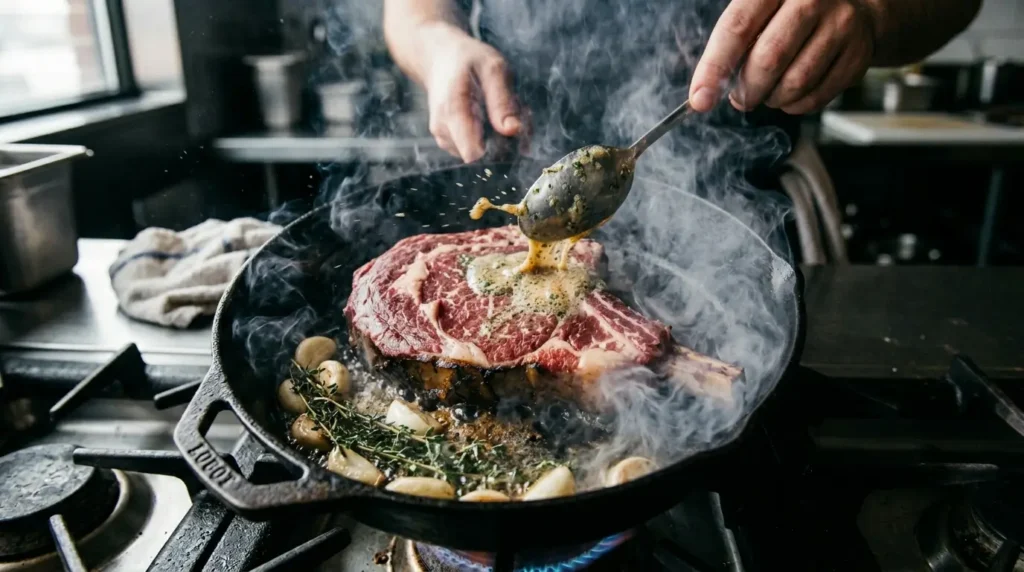
Flip the steak once. Reduce heat to medium-high. Add the butter, crushed garlic, and thyme to the pan. As the butter melts and begins to foam, tilt the pan slightly and use a large spoon to baste the steak continuously with the herb-infused butter for 2 to 3 minutes.
5. Sear the Fat Cap
Using tongs, hold the steak on its side so the fat cap contacts the pan directly. Press firmly and render the fat for 60 to 90 seconds until golden brown. This step is easy to skip and consistently skipped — do not skip it.
6. Check Internal Temperature
Insert an instant-read thermometer into the thickest part of the steak, avoiding the bone and any fat seams. Pull the steak off heat when it reads 5°F below your target doneness — it will carryover-cook during the rest.
| Doneness | Pull Temp | Final Temp After Rest | Color at Center |
|---|---|---|---|
| Rare | 120°F (49°C) | 125°F (52°C) | Deep red, cool center |
| Medium-rare | 125°F (52°C) | 130°F (54°C) | Red, warm center |
| Medium | 135°F (57°C) | 140°F (60°C) | Pink throughout |
| Medium-well | 145°F (63°C) | 150°F (66°C) | Slight pink at center |
| Well done | 155°F (68°C) | 160°F (71°C) | No pink |
For a ribeye of this thickness, medium-rare is the standard recommendation — the intramuscular fat in the ribeye needs heat to render and carry flavor, but not so much that it tightens and squeezes out.
7. Rest the Steak
Transfer to a wire rack set over a baking sheet. Do not place the steak on a flat plate — the bottom will steam and soften the crust you just built. Rest uncovered for 5 to 8 minutes. For a steak this thick, 8 minutes is correct.
8. Slice and Serve
Slice against the grain if serving off the bone, or serve whole. Finish with a pinch of pink Himalayan salt flakes directly on the cut surface just before serving.
PrintPink Salt Steak (Salt-Crusted Ribeye)
A thick ribeye coated in coarse pink Himalayan salt and seared in a screaming-hot cast iron skillet — delivering a steakhouse-quality crust in about 25 minutes. Coarse pink salt acts as both seasoning and a heat conductor, building a consistent Maillard crust that fine salt simply can’t match.
- Prep Time: 30
- Cook Time: 10
- Total Time: 40
- Yield: 2 servings
- Category: Main Course
- Method: Cast Iron / Stovetop
- Cuisine: American
Ingredients
- 1 bone-in ribeye steak, 1¼ to 1½ inches thick (about 14–16 oz)
- 1½ teaspoons coarse pink Himalayan salt
- ½ teaspoon coarsely cracked black pepper
- 1 tablespoon avocado oil or grapeseed oil (high smoke point)
- 2 tablespoons unsalted butter
- 2 garlic cloves, lightly crushed
- 2 sprigs fresh thyme
Instructions
- Salt and temper (30 min before cooking). Remove steak from the refrigerator 30 minutes ahead. Pat completely dry with paper towels on all sides. Season generously with coarse pink Himalayan salt and cracked black pepper, pressing the crystals gently into the surface. Rest uncovered at room temperature for 30 minutes.
- Heat the cast iron. Place a 12-inch cast iron skillet over high heat for 3 to 5 minutes until smoking. Add oil and swirl to coat.
- Sear first side. Lay the steak away from you into the pan. Sear undisturbed for 3 minutes — do not press or move it. The steak is ready to flip when it releases cleanly from the pan.
- Flip and baste. Flip once. Reduce heat to medium-high. Add butter, garlic, and thyme. Tilt the pan and baste the steak continuously with the foaming herb butter for 2 to 3 minutes.
- Render the fat cap. Using tongs, hold the steak upright so the fat cap contacts the pan. Press firmly and render for 60 to 90 seconds until golden.
- Check temperature. Insert an instant-read thermometer into the thickest part, avoiding bone. Pull the steak 5°F below your target doneness (see notes — it will carryover cook during rest).
- Rest. Transfer to a wire rack over a baking sheet. Rest uncovered for 8 minutes — do not rest on a flat plate or the bottom crust will steam and soften.
- Slice and finish. Slice against the grain or serve bone-in. Finish with a pinch of pink Himalayan salt flakes on the cut surface just before serving.
Notes
Doneness temperature guide (pull temp → final temp after rest):
- Rare: pull at 120°F → rests to 125°F
- Medium-rare: pull at 125°F → rests to 130°F ✅ recommended for ribeye
- Medium: pull at 135°F → rests to 140°F
- Medium-well: pull at 145°F → rests to 150°F
- Well done: pull at 155°F → rests to 160°F
Salt substitution ratio: This recipe is calibrated for coarse pink Himalayan salt. If substituting table salt, reduce to 1 teaspoon — table salt is finer and denser, so 1½ tsp would over-season the same cut.
Bone-in vs. boneless: Bone-in ribeyes take 2–4 minutes longer to reach temperature. Always use a thermometer, not the clock.
Why coarse pink salt? The larger crystal size acts as a heat conductor against the cast iron surface, building a more consistent, crunchy crust. Fine salt dissolves quickly and can leave wet spots that inhibit browning. See our guide to fine vs. coarse pink salt for more detail.
Reverse sear option: Season as described, then roast on a wire rack at 250°F until 10°F below target. Finish with a 90-second sear per side in the cast iron. Ideal for cuts over 1½ inches thick.
Why Coarse Pink Salt Builds a Better Steak Crust
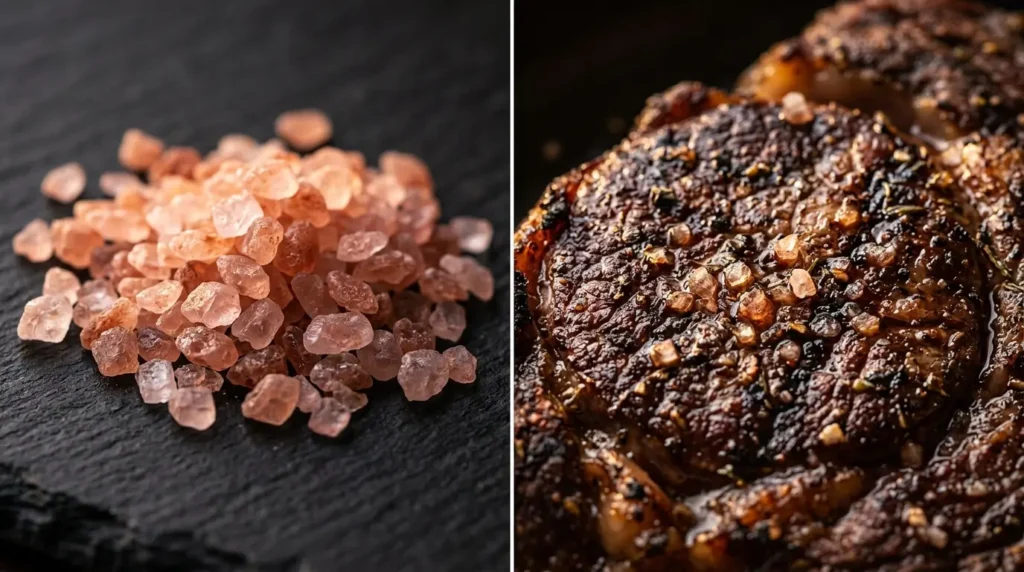
The grain size of coarse pink Himalayan salt sits in a useful middle ground: larger than fine table salt, smaller than chunky sea salt flakes. This matters for two reasons.
First, when the large crystals hit a 500°F cast iron surface, they act as tiny heat conductors, drawing the surface temperature of the meat up quickly and uniformly. The result is a consistent Maillard crust rather than the patchy browning you get from fine salt, which dissolves almost immediately and can leave wet spots.
Second, coarse Himalayan salt retains its crystal structure on the surface of the meat during the 30-minute temper, rather than fully dissolving into a brine. This means you get textural contrast in the finished crust — the crunchy exterior that defines a great steakhouse sear.
For a more detailed breakdown of when to use fine versus coarse pink salt in cooking, see our guide to fine vs. coarse pink salt.
Frequently Asked Questions
Yes. A New York strip (1¼-inch minimum) and a T-bone both work well with this method. Leaner cuts like sirloin will produce a less rich result because there is less fat to render. Filet mignon works, but its mild flavor benefits less from the mineral notes of pink Himalayan salt.
You can season with fine pink salt, but you will not get the same crust quality. Fine salt dissolves fully and draws more moisture to the surface during the temper, which requires a longer drying period before searing. If fine is all you have, pat the steak very dry immediately before it goes into the pan and use slightly less salt by volume (fine salt is more compact and saltier per teaspoon).
Drop a single drop of water into the dry pan. It should skitter across the surface and evaporate in under a second (the Leidenfrost effect). If it simply sizzles and evaporates slowly, the pan needs more time.
Yes — a reverse sear works well with this recipe. Season and temper the steak as described, then roast on a wire rack at 250°F (120°C) until the internal temperature is 10°F below your target. Transfer to the cast iron for a quick 90-second sear per side to form the crust. This method gives you more control over final temperature, particularly for thick cuts over 1½ inches.
For a ribeye with this crust profile, a medium-to-full-bodied red with moderate tannins works best — Malbec, Côtes du Rhône, or a California Zinfandel. The mineral character of the pink salt is subtle enough that it does not clash with fruit-forward wines.
Recipe Notes
- Salt quantity and substitution: This recipe calls for 1½ teaspoons of coarse pink Himalayan salt for a 14–16 oz ribeye, which is a standard 1% seasoning ratio by weight. Do not substitute table salt 1:1 — table salt is finer and denser, so 1½ teaspoons of table salt would over-season the same cut. If substituting, reduce to 1 teaspoon.
- Bone-in vs. boneless: Bone-in ribeyes (also sold as cowboy cuts or tomahawks at greater thickness) take 2 to 4 minutes longer to reach temperature because the bone insulates the surrounding meat. Use the thermometer, not the clock.
- Sourcing the salt: For this recipe, a coarse grind around 1–2mm is ideal. If your pink Himalayan salt came in a grinder, grind it coarsely rather than finely. See our Recipes hub for more dishes that put pink salt’s grain structure to work.