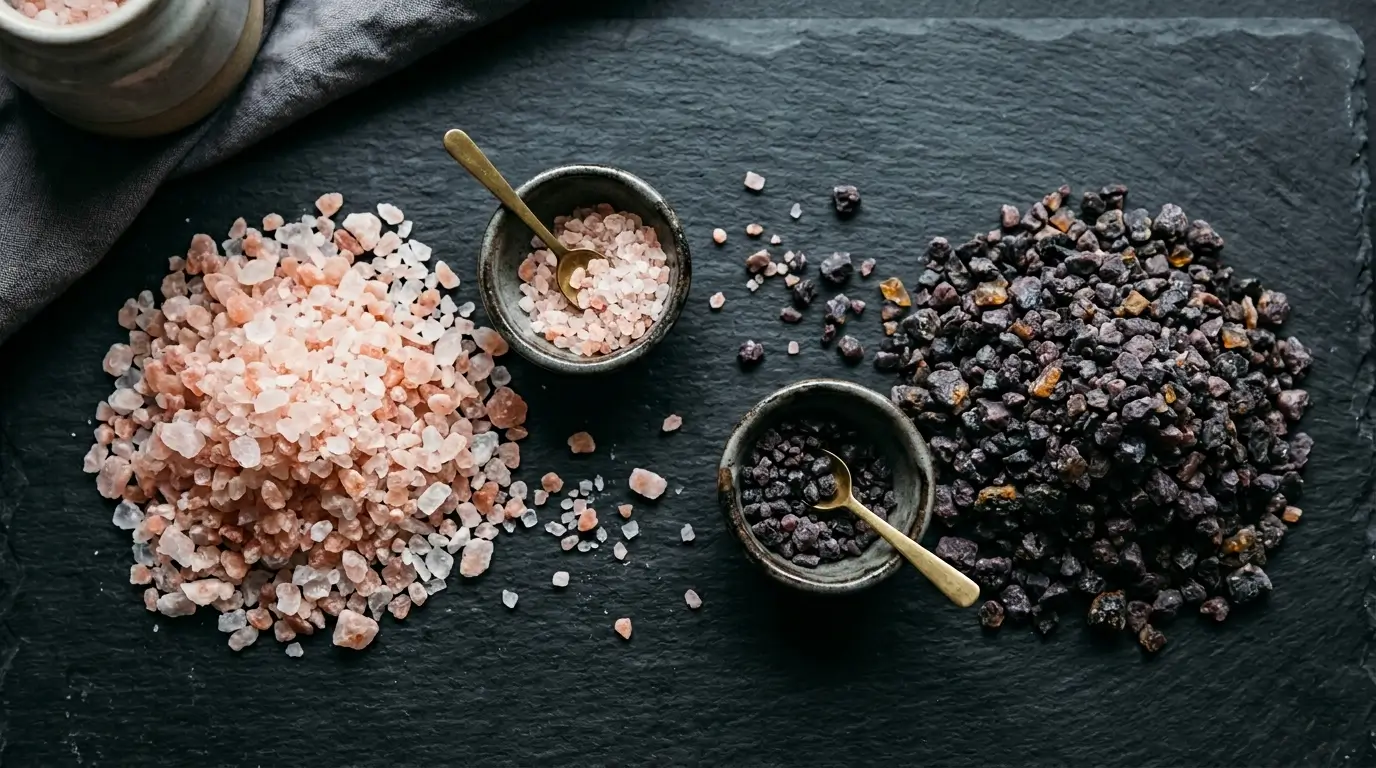
Pink salt and black salt are both specialty salts that show up in the same gourmet shops and online pantry lists — but in the pink salt vs black salt debate, the similarities end at the shelf. Pink Himalayan salt is a mild, mineral-flavored rock salt that works in virtually any kitchen application. Black salt, known as kala namak in South Asian cooking, is pungent, sulfurous, and unmistakably eggy — a bold and specific ingredient that serves an entirely different purpose.
If you’re wondering which one belongs in your kitchen, or whether you need both, this comparison covers everything that actually matters: origin, flavor, smell, culinary use, and which to buy first.
For a broader overview of how pink salt measures up against every major variety, start with our complete guide to pink salt vs other salts.
Quick Verdict
| Pink Himalayan Salt | Black Salt (Kala Namak) | |
|---|---|---|
| Color | Pale rose to deep terracotta | Purplish-black crystals; pinkish-gray when ground |
| Taste | Mild, clean, lightly mineral | Pungent, sulfurous, distinctly eggy |
| Smell | Neutral | Strong — like hard-boiled eggs |
| Origin | Khewra Salt Mine, Pakistan | Northern India/South Asia (volcanic/evaporite deposit) |
| Best for | Everyday cooking, finishing, presentation | Vegan egg dishes, Indian chaat, South Asian cuisine |
| Cuisine | Universal | South Asian, plant-based cooking |
| Price | Moderate | Moderate to affordable |
Bottom line: Pink salt is the versatile everyday workhorse; kala namak is the specialist. They occupy completely different flavor lanes, so having both is not redundant — it’s practical.
Origins of Each Salt
Pink Himalayan Salt
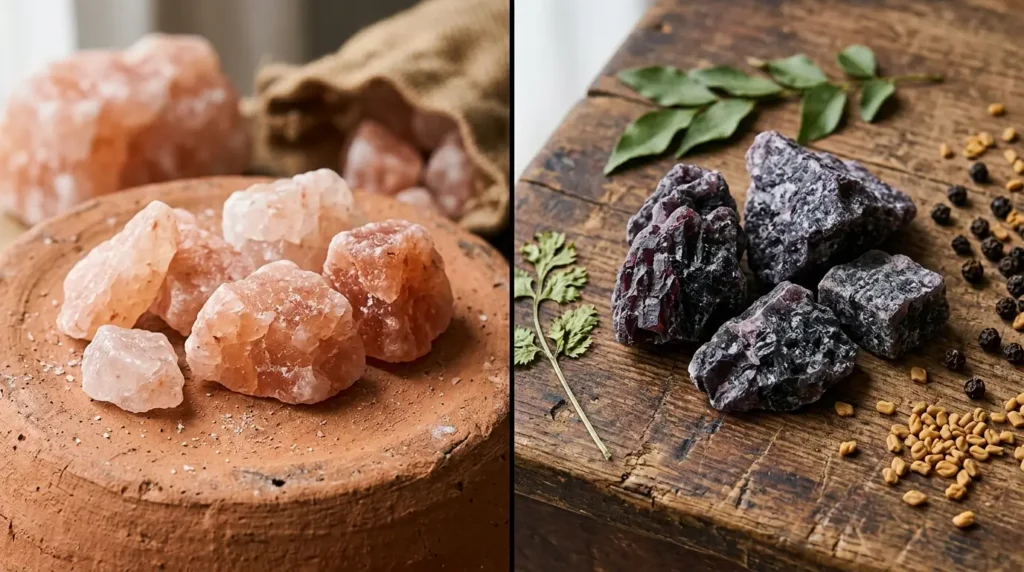
Pink Himalayan salt is a rock salt extracted from the Khewra Salt Mine in the Punjab province of Pakistan — the second-largest salt mine in the world. The deposit formed approximately 600 million years ago when an ancient inland sea evaporated and left its mineral content locked inside the surrounding rock. That mineral content includes trace amounts of iron oxide, which is responsible for the salt’s characteristic pink hue. The exact shade ranges from pale blush to deep terracotta depending on the local concentration of minerals in each pocket of the deposit.
Despite the “Himalayan” label, the mine sits roughly 186 miles southwest of the Himalayan mountain range itself. The name is a marketing convention rather than a precise geographic designation, but the salt’s geological origin and mineral character are genuine and well-documented.
There are several other salts that share the “pink” label but come from entirely different sources, including Hawaiian Alaea and Peruvian Maras pink salt — a distinction worth understanding before buying. Our guide to types of pink salt covers each variety in full.
Black Salt (Kala Namak)
Kala namak — Hindi for “black salt” — is deeply rooted in South Asian culinary and Ayurvedic tradition. The salt originates from volcanic and haline mineral deposits found primarily across India, Pakistan, Nepal, and Bangladesh, with most commercial production centered in northern India.
What makes kala namak fundamentally different from other salts is that it is processed, not simply mined and cleaned. Authentic kala namak is produced by packing raw rock salt with charcoal, bark from the harad tree (Terminalia chebula), and a small blend of aromatic seeds and herbs, then firing the mixture in a sealed clay kiln at temperatures above 800°C for anywhere from 18 to 24 hours. The intense heat drives a series of chemical reactions that transform the salt’s mineral composition entirely, producing the sulfur compounds that give kala namak its unmistakable flavor and color.
Raw kala namak crystals are purplish-black. Once ground into powder, the salt fades to a muted pinkish-gray or pale lavender — which is why the two salts can look deceptively similar in ground form on a spice shelf.
Why Black Salt Tastes So Different from Pink Salt
The eggy, sulfurous quality of kala namak is not a flaw or an acquired taste — it is the entire point of the ingredient, and it is the result of specific chemistry.
During the kiln-firing process, the organic material reacts with the sodium chloride base to form hydrogen sulfide (H₂S), sodium sulfate (Na₂SO₄), and iron sulfide (FeS). Hydrogen sulfide is the same compound that gives hard-boiled eggs and volcanic springs their characteristic smell. In the measured concentrations present in kala namak, it delivers a savory, sulfurous, egg-forward flavor that is completely unlike any other seasoning in a Western pantry.
The iron sulfide contributes to the dark color of unground crystals. A range of trace minerals — including magnesium, potassium, and calcium — add quiet depth to the flavor beneath that sulfurous lead note.
One practical implication: kala namak’s sulfur compounds activate more strongly when heated. Add it to a hot dish or dissolve it in warm liquid, and the egg aroma becomes noticeably more pronounced than it would be tasted cold from a spoon.
Pink Salt in the Kitchen
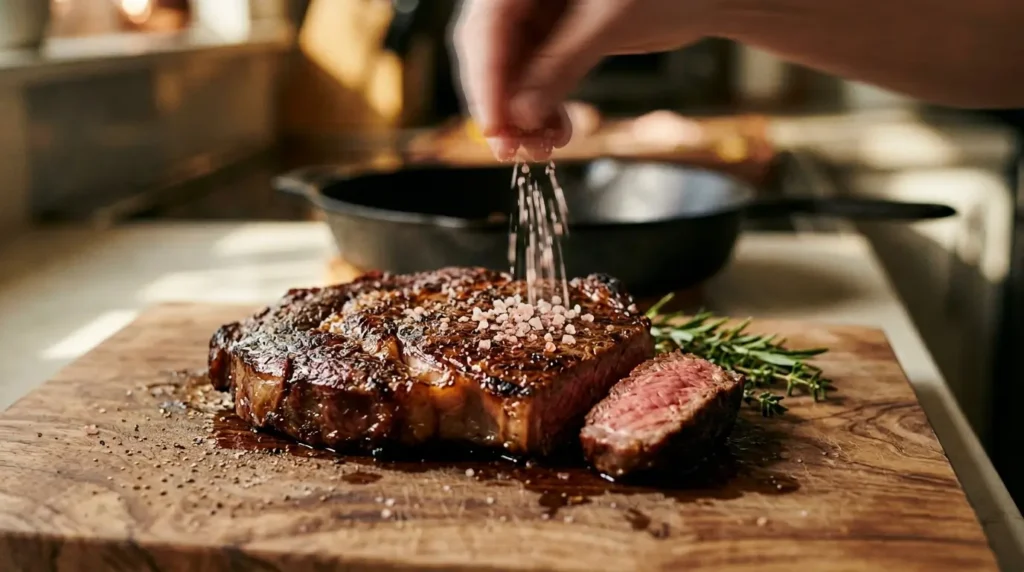
Pink Himalayan salt functions as a clean, premium substitute for table salt or sea salt across virtually every cooking application. Its mineral character is mild enough that it does not change the flavor profile of a dish in the way kala namak would — it simply seasons.
Everyday cooking. Fine-ground pink salt substitutes directly for table salt, though the lower bulk density of coarser crystals means a level teaspoon will contain less sodium by weight, so some measurement adjustment by taste is useful.
Finishing. Coarse crystals or flakes added right before serving deliver a brief crunch and a clean hit of salinity. Pink salt works particularly well as a finishing touch on grilled meats, roasted vegetables, chocolate-based desserts, and composed salads — anywhere visual contrast and textural pop matter as much as flavor.
Grilling and salt-crusting. The coarser grades are a natural choice for encrusting steaks, whole fish, and lamb chops before searing, where the mineral note complements the deep, browned flavors from the grill or cast iron.
Presentation and garnish. Pink salt’s color gives it genuine visual appeal on cocktail rims, charcuterie boards, and plated desserts — uses where the salt doubles as a visual element. No other neutral-flavored salt offers the same combination of looks and versatility.
Kala Namak in the Kitchen

Kala namak’s primary strength in contemporary cooking is its ability to replicate egg flavor in dishes that contain no eggs at all, which has made it a cornerstone ingredient in vegan and plant-based cooking. Beyond that application, it is essential to several foundational South Asian preparations.
Vegan egg dishes. A quarter-teaspoon of kala namak folded into a tofu scramble, chickpea omelet, or cashew-based quiche delivers the sulfurous flavor cue that registers as “egg” on the palate. Most experienced plant-based cooks treat it as non-negotiable for this use — nothing else replicates the effect with comparable accuracy.
Chaat and Indian street food. Kala namak is a defining component of chaat masala, the tangy, complex spice blend that seasons chaat, pani puri, roasted corn, papdi chaat, and a broad range of Indian street foods. Its sour-salty-sulfurous quality is inseparable from the flavor profile of the whole chaat category.
Raita and chutneys. A pinch of kala namak in yogurt-based raita or tamarind chutney completes the acid-salt balance in a way that standard table salt or even pink salt cannot replicate — the sulfur adds an earthy depth that lifts the sour notes.
Cooling drinks. In Indian beverages like jal jeera and shikanji — savory-sour lemonades popular during summer — kala namak is added in small quantities to create a savory-sour flavor combination that is entirely unlike a standard Western cold drink. It is an acquired taste for the uninitiated, but instantly recognizable and craveable once familiar.
Ayurvedic tradition. Kala namak has a centuries-long history of use in Ayurvedic medicine, where it is valued for its purported digestive properties. The cultural tradition is well-established even if the specific health claims fall outside the scope of what culinary advice should confirm.
Because of its intensity, kala namak should always be used in small amounts. Most recipes call for ¼ teaspoon or less as a finishing seasoning; more than that, and the eggy note overwhelms a dish rather than enhancing it.
Side by Side: Taste and Smell
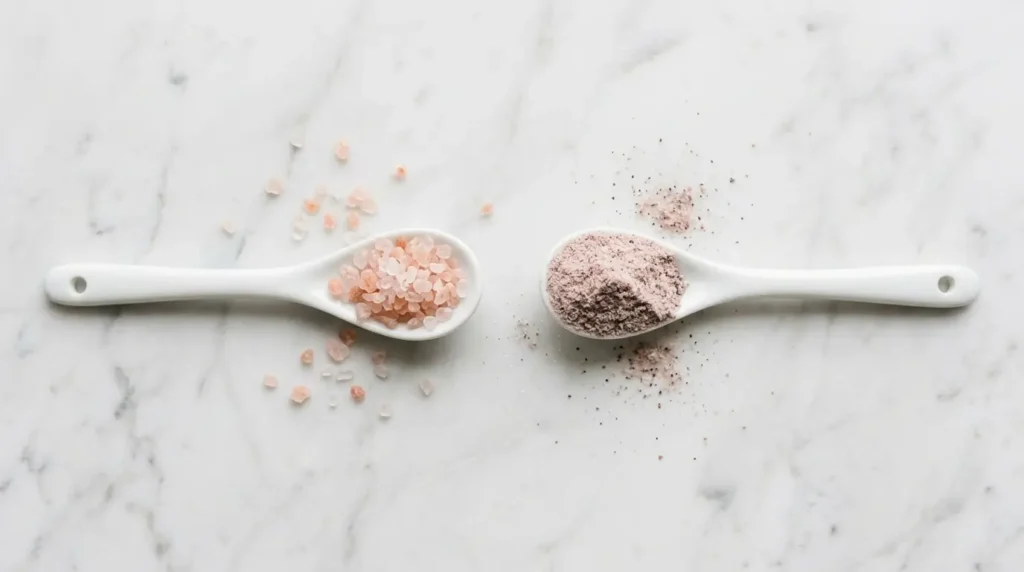
Placed next to each other, the sensory gap between these two salts is immediate and wide.
Pink Himalayan salt delivers clean salinity with a faint mineral undertone — subtly more complex than plain table salt, but not assertively different. The aroma at room temperature is essentially neutral. It reads as “good salt” without announcing itself.
Kala namak announces itself immediately. Before you even taste it, the sulfurous aroma is clearly detectable when you open the container. On the palate, the initial saltiness gives way quickly to a pungent, eggy, sulfurous character that makes it one of the most distinctive seasonings in any cuisine. The finish is long and savory.
The practical implication for cooking is significant: pink salt is entirely forgiving of volume adjustments and substitutes freely for most neutral salts. Kala namak is not forgiving — it is a precision ingredient that rewards a light touch. If you are experimenting with it for the first time, start with less than you think you need and build from there.
Which Salt Should You Buy First?
The answer is straightforward once you know how you cook.
Choose kala namak first if you follow a vegan or plant-based diet, cook South Asian food regularly, or are genuinely curious about ingredients with unusual flavor profiles. For tofu scrambles, chaat masala, and any preparation where egg-forward flavor is the goal, kala namak is irreplaceable — no other ingredient does what it does.
Choose pink salt first if you want a premium, visually appealing everyday salt that works across all cuisines and cooking styles without demanding any adjustment to how you season. It is an upgrade over standard table salt, not a departure from it.
The case for keeping both: These two salts are not competing for the same job. Pink salt seasons broadly; kala namak seasons specifically. A well-stocked kitchen benefits from having both — a larger container of pink salt for general use and a smaller jar of kala namak reserved for the applications where its sulfurous character is exactly the point.
Ready to keep exploring? Our complete guide to pink salt vs other salts compares every major salt variety — sea salt, kosher salt, Celtic salt, Hawaiian Alaea, and more — so you can stock your pantry with intention rather than guesswork.