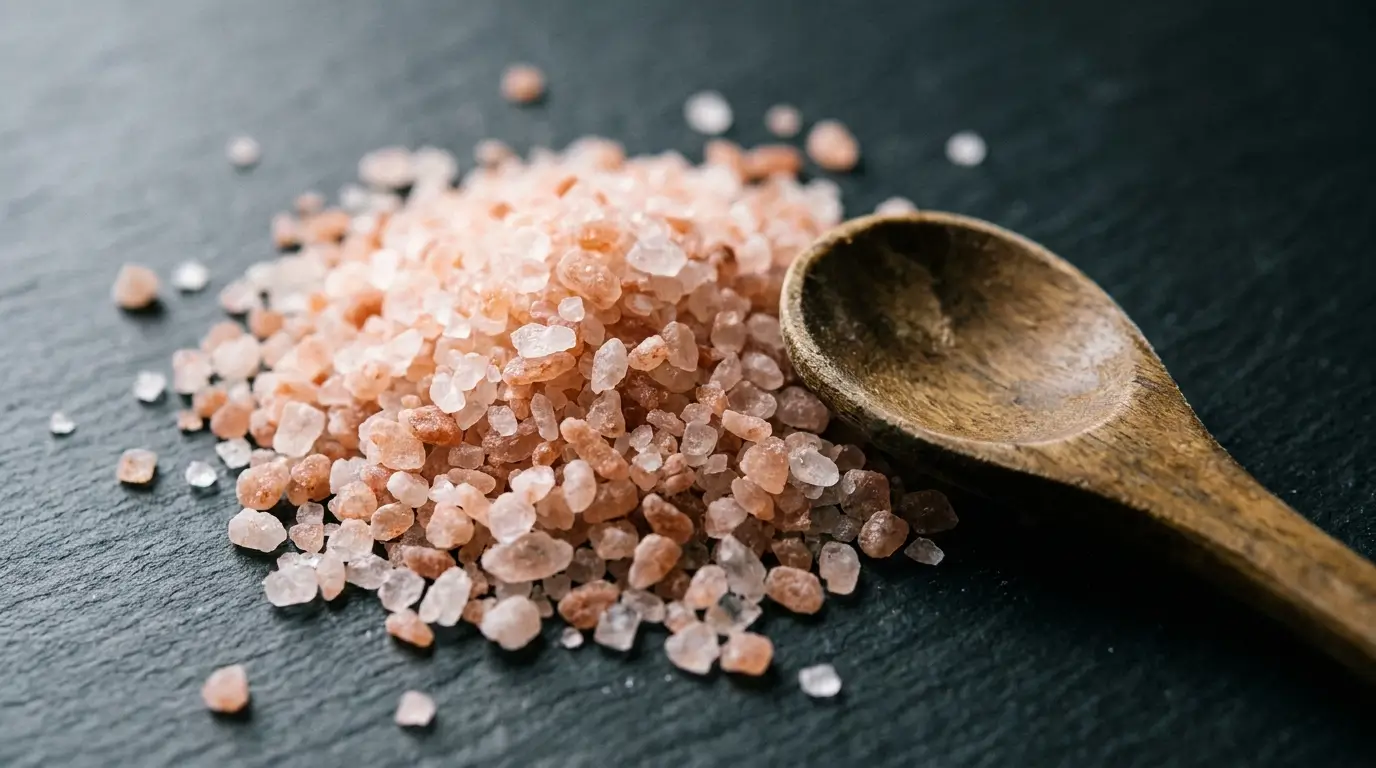
Himalayan pink salt shows up on gourmet shelves, wellness blogs, and grinders next to the stove, usually with a claim attached about “84 minerals” and superior nutrition. But what minerals are in Himalayan pink salt, and how much of that reputation holds up once a lab actually measures it? The short version: mostly sodium chloride, plus a small and quite variable amount of everything else. Below is what the strongest published testing on Himalayan pink salt minerals has actually found — and where the bigger claims run ahead of the evidence.
What Minerals Are in Himalayan Pink Salt?
Himalayan pink salt is mostly sodium chloride — commonly put somewhere in the mid-to-high 90s percent range, though the precise figure shifts by deposit — with a small, highly variable residue of other elements picked up from the surrounding rock. The most rigorous published lab testing has detected calcium, potassium, magnesium, iron, sulfur, aluminum, silicon, and a further set of trace elements, but none are present in amounts large enough to meaningfully change the salt’s nutritional profile.
Key takeaways:
- Himalayan pink salt is overwhelmingly sodium chloride, the same compound as ordinary table salt.
- The most rigorous published lab analysis found 25 nutrient and non-nutrient elements across 31 pink salt products — not a fixed, universal list of 84.
- The trace minerals in Himalayan salt vary enormously between brands, colors, and grinds; no single number describes every bag.
- Even the highest trace-mineral levels found are too small to meaningfully add to your daily nutrient intake.
- One tested sample exceeded a food-safety limit for lead — a reason to buy from a reputable source, not a sign that all pink salt is contaminated.
Himalayan Pink Salt Mineral Composition at a Glance
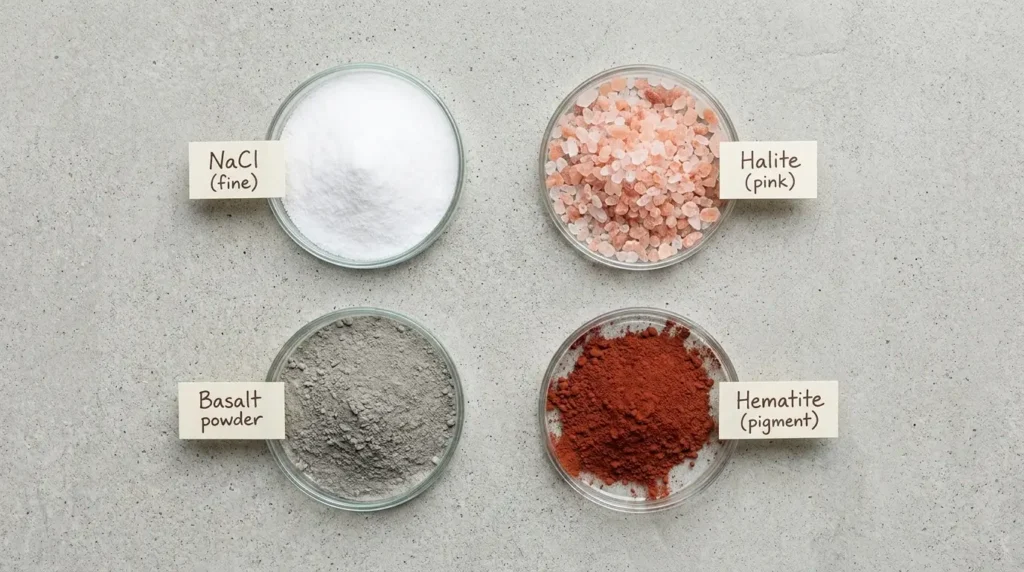
Here’s the clearest lab-based picture available of the minerals in pink Himalayan salt: a 2020 peer-reviewed analysis published in the journal Foods (also indexed on PubMed) used mass spectrometry to test 25 nutrient and non-nutrient elements across 31 commercially available pink salt products, most labeled as Himalayan in origin. Figures below are reported in milligrams per kilogram (mg/kg) — the standard unit for trace-level lab results — and reflect the real spread the researchers measured, not a single fixed formula.
| Mineral or Element | Why It’s Present | Approximate Measured Range | Nutritionally Meaningful at Normal Intake? |
|---|---|---|---|
| Sodium | Primary component of the salt crystal (NaCl) | About 343,000–459,000 mg/kg (roughly 34–46% by weight) | Yes* |
| Chloride | Other half of the sodium chloride crystal | Not directly tested by mineral panels like this one (see explanation below) | Yes* |
| Calcium | Trace mineral from the surrounding rock and ancient seabed deposit | About 530–5,740 mg/kg | No |
| Potassium | Trace mineral from the surrounding deposit | About 100–4,530 mg/kg | No |
| Magnesium | Trace mineral from the surrounding deposit | About 150–11,940 mg/kg | No |
| Iron | Iron oxide and iron hydroxide impurities — also the source of the pink color | 0–168 mg/kg (undetectable in some samples) | No |
| Sulfur | Sulfate-bearing minerals in the surrounding rock | About 1,700–33,750 mg/kg | No |
| Aluminum | Naturally occurring in the parent rock; non-nutritive | 0–193 mg/kg | No |
| Silicon | Naturally occurring in the parent rock; non-nutritive | 0–372 mg/kg | No |
| Other tested trace elements (chromium, copper, manganese, molybdenum, phosphorus, selenium, zinc, barium, boron, cadmium, cobalt, mercury, nickel, vanadium) | Naturally occurring, deposit-dependent | Generally under 1 mg/kg to low single digits; several detected in only a handful of the 31 samples. Arsenic and silver were not detected in any sample. | No |
*Sodium and chloride are “meaningful” mainly because a single teaspoon of any salt already supplies a large share of the FDA’s daily sodium limit — that’s a caution about intake, not a nutritional benefit to seek out. Chloride wasn’t part of the 25-element panel above: standard mineral-testing panels like this one use mass spectrometry, a method built to detect metals and similar elements, not the chloride ion, so its share is inferred from ordinary salt chemistry rather than measured directly. More on that in the next section.
Is Himalayan Pink Salt Really 84 Minerals?
The “84 minerals” claim is nearly unavoidable on salt packaging and wellness sites. A closer look at where it comes from — and what real lab testing shows — tells a much more modest story.
Where the 84-Mineral Claim Came From
No peer-reviewed, publicly available analysis has published a verified list of exactly 84 distinct minerals in Himalayan salt. The number circulates widely across marketing copy and blog content, but it rarely traces back to a named laboratory, sample size, or testing method. Some versions of the count also fold in basic elements like hydrogen and oxygen — present in essentially all matter, including any water bound up in the rock — rather than distinctive minerals with nutritional relevance. Treat the figure as marketing shorthand for “many trace elements,” not a lab-verified inventory.
What Laboratory Research Has Actually Tested
The strongest published research is the 2020 Australian analysis referenced throughout this article, led by researchers at Nutrition Research Australia. The team purchased every pink salt product they could find across two cities and one regional town, then sent 31 samples — plus a standard iodized table salt for comparison — for mass spectrometry testing across 25 nutrient and non-nutrient elements.
Most of the products (87%) were labeled as Himalayan in origin; the rest came from Australia or Peru. That’s a far more rigorous foundation than any 84-mineral list circulating online, and it’s the source behind most of the figures in this article.
Why “Detected” Does Not Mean “Nutritionally Significant”
Sensitive lab equipment can detect elements down to fractions of a milligram per kilogram — far below any level that matters to human nutrition. The Australian researchers made this point directly: even counting every nutrient found in pink salt, someone would need to eat more than 30 grams (roughly six teaspoons) a day before the minerals added up to a meaningful contribution to their diet.
Thirty grams of pink salt would also supply roughly five times the FDA‘s recommended daily sodium limit — a level nobody should actually be consuming. Detecting a mineral in a sensitive lab scan, in other words, isn’t the same as that mineral doing anything useful for your health at the amount anyone actually eats.
How Much of Pink Salt Is Sodium Chloride?
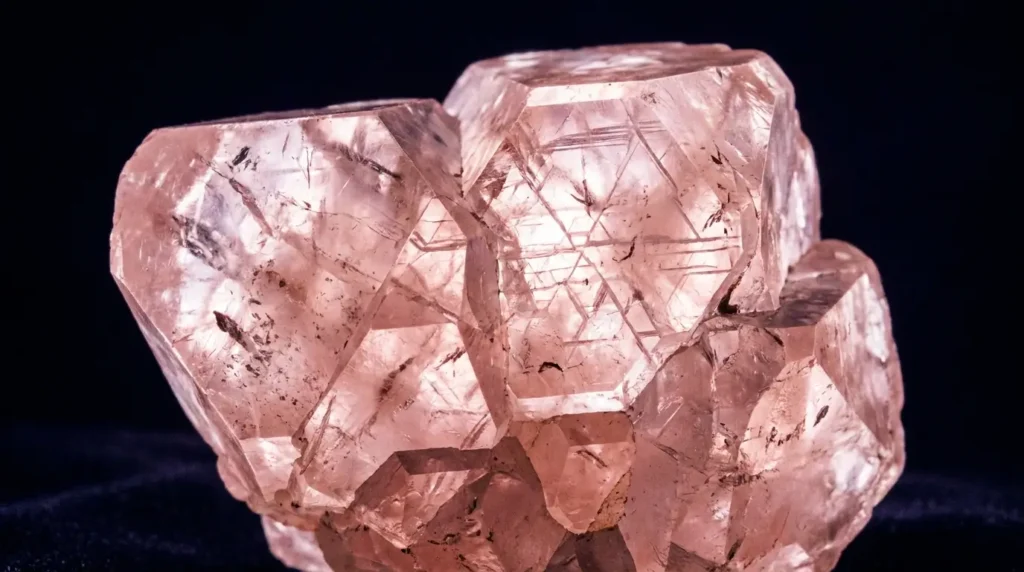
Understanding Himalayan salt’s chemical composition starts with separating three things that tend to get blurred together in marketing copy: sodium (an element), sodium chloride (the compound — its chemical formula is simply NaCl, the same as any other salt), and trace minerals (everything else). Pure sodium chloride is about 39% sodium and 61% chloride by weight.
When the Australian researchers measured sodium directly, pink salt samples averaged about 39.5% sodium by weight, ranging roughly 34–46% across the 31 samples — in the ballpark of what you’d expect from a salt that is very close to pure sodium chloride. Estimates of pink salt’s sodium chloride percentage commonly land somewhere in the mid-to-high 90s, though, as with everything else in this article, the exact figure depends on the deposit and isn’t identical from bag to bag.
Chloride itself wasn’t part of the 25-element panel. Mass spectrometry mineral scans are built to detect metals and similar elements, not the chloride ion, so chloride’s share is inferred from ordinary salt chemistry rather than measured directly in datasets like this one.
In practical terms, a single teaspoon (about 5 grams) of pink salt supplies roughly 1,974 mg of sodium on average — already about 86% of the FDA’s recommended daily limit of 2,300 mg, before you’ve eaten anything else that day.
Interestingly, the pink salt samples in the study actually averaged slightly less sodium by weight than the single iodized table salt used for comparison (about 394,700 mg/kg versus 427,600 mg/kg) — a small but statistically real difference. Practically, that means the trace minerals in pink salt displace a little sodium rather than adding on top of a full sodium-chloride base.
For the fuller picture of everything besides minerals — moisture, crystal structure, and how the salt actually forms — see our guide to what pink salt is made of.
Which Minerals Give Himalayan Salt Its Pink Color?
The color comes down to iron — specifically trace iron oxide and iron hydroxide compounds (chemically related to rust) embedded in the salt crystals from the surrounding rock. More of these compounds generally means a deeper pink or red hue; salt with none of them stays white or clear.
Color isn’t a reliable stand-in for overall mineral content, though. The Australian study found that darker samples did average higher levels of several elements — calcium, potassium, aluminum, and silicon — but iron itself showed no meaningful difference between dark and light samples. A deep red grinder salt isn’t necessarily higher in iron than a pale pink one; it may simply reflect a different mix of minerals from a different part of the deposit.
For the full explanation of the pigments involved and why shade varies so much between products, see our guide to why Himalayan salt is pink.
Do the Trace Minerals Provide Meaningful Nutrition?
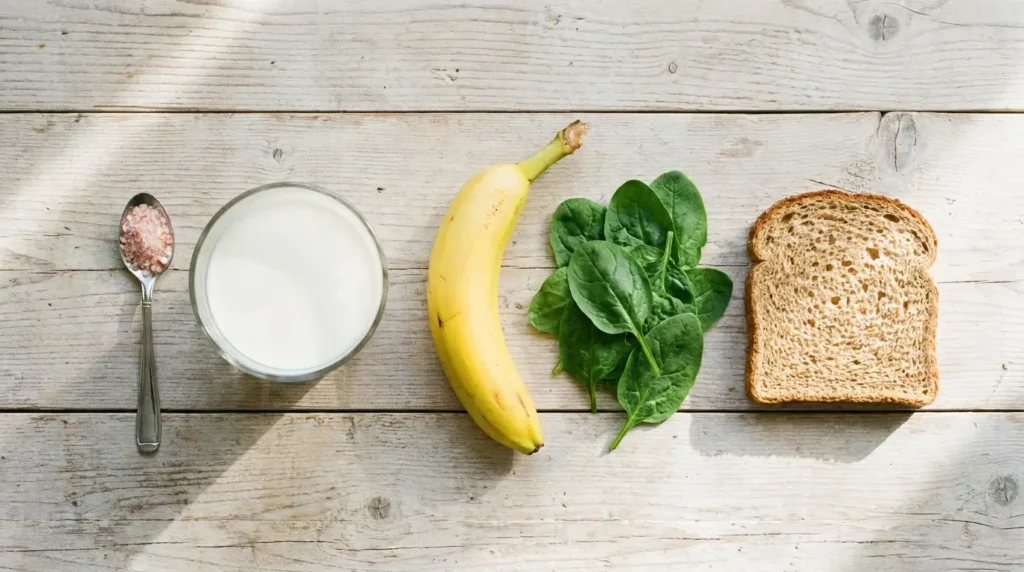
A typical serving of salt is small — about 1 teaspoon, or 5 grams — which limits how much any trace mineral can matter, no matter how impressive a milligram-per-kilogram figure looks on its own. Based on the mean values from the Australian lab analysis, a teaspoon of pink salt provides approximately:
- Calcium: about 13 mg
- Potassium: about 12 mg
- Magnesium: about 13 mg
- Iron: about 0.3 mg
Compare that with a few ordinary foods. A cup of milk supplies more calcium (about 300 mg) than 20 teaspoons of pink salt would. A medium banana supplies more potassium (about 420 mg) than 30 teaspoons of pink salt would. A cup of cooked spinach supplies about as much magnesium (roughly 157 mg) as a dozen teaspoons of pink salt would. And a single slice of whole-wheat bread supplies roughly three times the iron of a teaspoon of pink salt.
None of this makes pink salt harmful — it simply isn’t a meaningful source of any of these nutrients at the amount anyone actually sprinkles on food. For the fuller picture of what pink salt can (and can’t) do for you beyond mineral content, see our guide to Himalayan pink salt benefits.
Can Mineral Levels Differ Between Brands?
Yes — and pink salt mineral content is one of the clearest findings in the lab data, varying by several distinct factors:
- Country of origin. Himalayan-origin samples in the study averaged higher iron, potassium, aluminum, silicon, cobalt, and barium than pink salt from other regions, but lower cadmium and lead.
- Color. Darker samples generally ran higher in calcium, potassium, aluminum, barium, and silicon, and lower in magnesium and boron, than pale or colorless samples.
- Grain size. Flaked salt contained more copper, manganese, sodium, and cadmium than finely ground or coarse salt from the same brands; coarse salt ran higher in potassium than finely ground salt.
- Processing. How a producer washes, dries, or grinds the raw rock salt can concentrate or dilute its mineral content slightly, on top of differences already driven by origin and grain size. The study didn’t isolate processing as its own variable, but it’s a plausible contributor to the wide ranges reported above.
- Mine layer. Salt deposits form in geological bands, and the surrounding rock at each layer determines which trace elements end up in that particular batch — the underlying reason origin, color, and grain size all correlate with mineral content in the first place.
- Laboratory variation. Each sample in the study was analyzed once, by a single laboratory; the researchers note that repeat testing, or testing by a different lab, could shift individual numbers somewhat even if the broad pattern holds.
Because origin and processing affect mineral content this much, and because “Himalayan” sometimes appears on packaging for salt that isn’t genuinely from the Khewra region, it’s worth knowing how to spot fake Himalayan salt before you buy.
Are Heavy Metals Found in Pink Salt?
Pink salt is rock salt, mined from deposits shaped by the geology — and, in some cases, the pollution history — of the surrounding region, so it’s a fair question to ask.
The Australian lab analysis is the most direct evidence available. Arsenic and silver were not detected in any of the 31 pink salt samples tested, and cadmium and mercury, where present, stayed within Australian food-safety limits in every sample.
Lead was the exception. One sample — a Peru-origin product, not a Himalayan one — measured 2.59 mg/kg, above the 2 mg/kg maximum contaminant level set by Food Standards Australia New Zealand for salt, and well above the levels found in the other 30 samples.
That single result is a real finding, not a reason to assume every pink salt product on a shelf is contaminated. It’s a reminder that origin and sourcing matter, and that buying from an established brand with visible quality testing is a reasonable precaution rather than an overreaction.
Pink Salt Minerals vs Table Salt
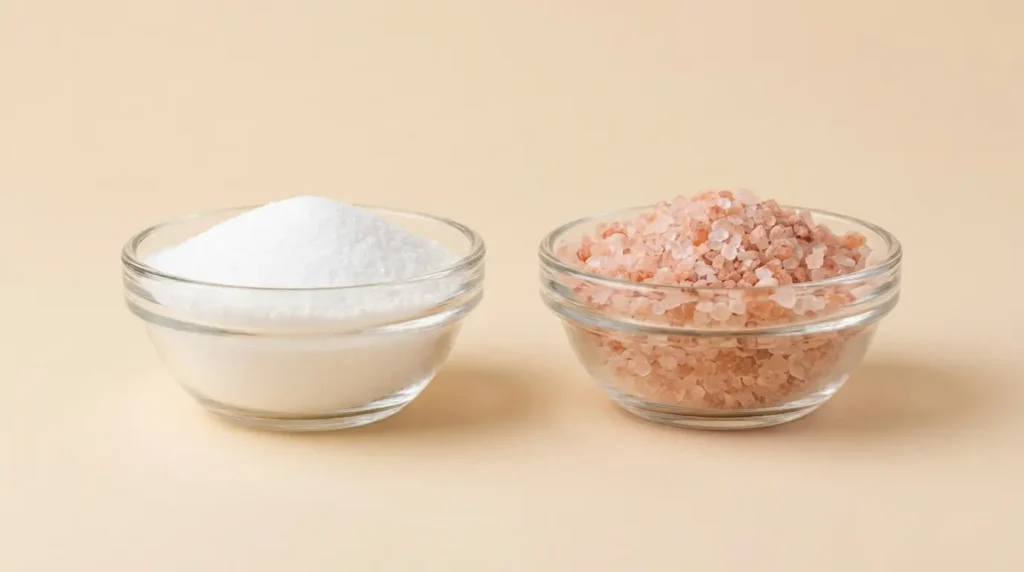
Lab testing gives a clearer comparison than marketing copy does. Compared with a standard iodized white table salt, the pink salt samples in the Australian study averaged:
| Mineral | Pink Salt (Mean, mg/kg) | White Table Salt (mg/kg) |
|---|---|---|
| Calcium | About 2,695 | About 393 |
| Iron | About 63.8 | Not detected |
| Magnesium | About 2,655 | About 84 |
| Potassium | About 2,406 | About 152 |
| Sodium | About 394,700 | About 427,600 |
Pink salt came out significantly higher in calcium, iron, magnesium, and potassium, and very slightly lower in sodium. It also ran higher in some non-nutritive elements, including aluminum, silicon, and sulfur — not additives, just naturally part of unrefined rock salt.
For a fuller side-by-side, including taste, processing, and iodine content, see our full pink salt vs table salt comparison.
Frequently Asked Questions
Sodium chloride — ordinary salt — makes up the overwhelming majority of Himalayan pink salt’s weight. Everything else discussed in this article is a minor, variable trace addition, not a second major ingredient.
Yes, in trace and highly variable amounts. Magnesium in Himalayan pink salt ranged from about 147 to 11,938 mg/kg across the 31 tested samples in the Australian lab analysis — a spread that shows how much magnesium content depends on the specific deposit.
Yes. Potassium in Himalayan pink salt measured roughly 98 to 4,529 mg/kg in the same study, averaging far higher than in standard iodized table salt — though still too little, at normal serving sizes, to meaningfully affect your daily potassium intake.
Most samples do. Iron in Himalayan pink salt generally ranged from undetectable up to about 168 mg/kg, and it’s this iron — as iron oxide — that gives the salt its pink color. A few tested samples had no detectable iron at all.
Only in negligible natural amounts. Unlike iodized table salt, pink salt isn’t fortified with added iodine, so it doesn’t reliably contribute to your iodine intake. See our dedicated page on does Himalayan pink salt contain iodine for the full picture.
No verified, peer-reviewed source backs up that exact number. The most rigorous published lab analysis tested 25 elements, not 84, and found wide variation between products rather than one fixed profile.
No. The quantities involved are too small, relative to safe sodium intake, to function as a meaningful supplement for calcium, magnesium, potassium, or iron.
The Bottom Line on Himalayan Pink Salt Minerals
So, what minerals are in Himalayan pink salt? Mostly sodium chloride, with calcium, potassium, magnesium, iron, sulfur, aluminum, silicon, and a longer list of trace elements rounding out a small and highly variable remainder. The rigorous version of that story — 25 elements measured across 31 real products — is a lot less dramatic than “84 minerals,” but it’s the version that actually holds up.
If you enjoy pink salt for its flavor, texture, or the way it looks in a grinder, nothing here should change that. Just don’t reach for it as a mineral supplement, and buy from a source you trust.