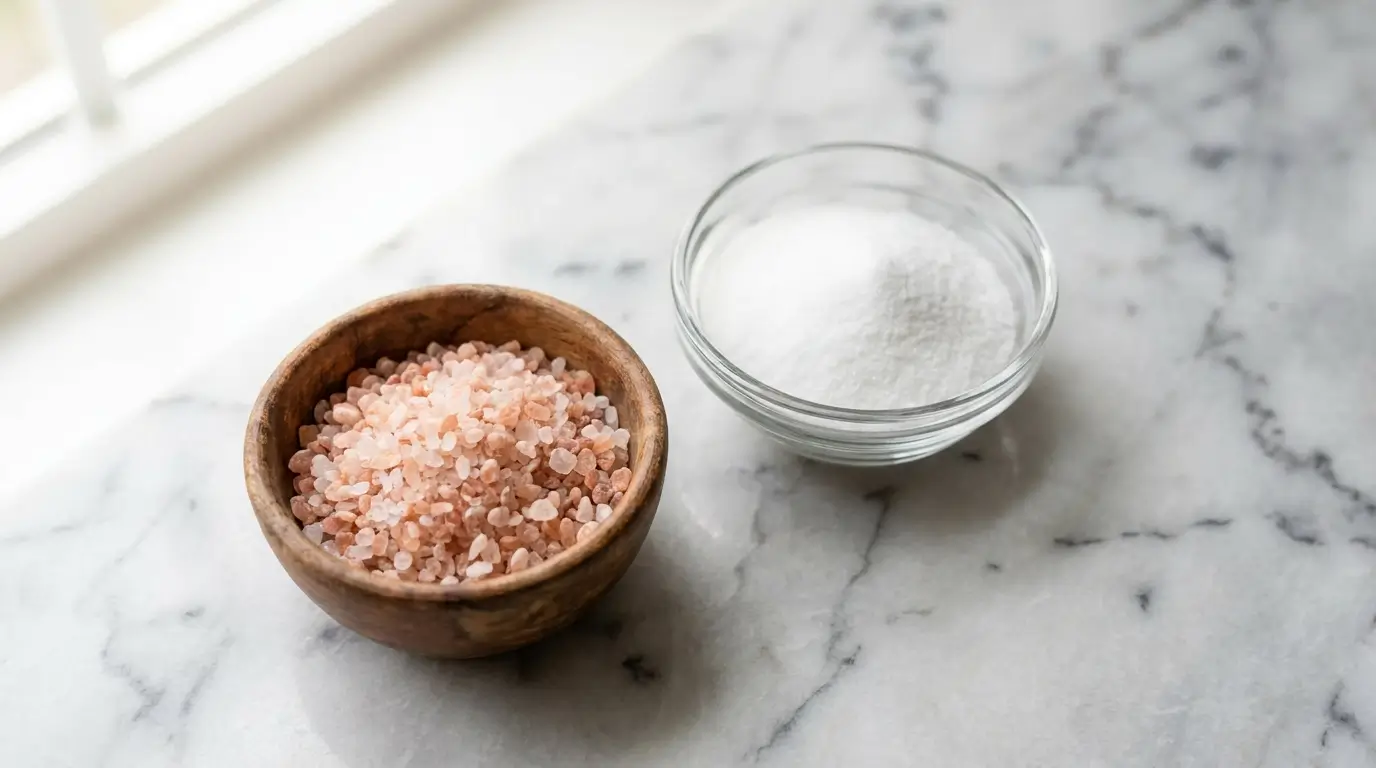
If you’ve swapped your everyday table salt for Himalayan pink salt, it’s worth asking a simple question: does Himalayan pink salt have iodine, and can it replace iodized salt in your diet?
The short answer is that it may carry tiny natural traces, but it isn’t a dependable iodine source the way iodized table salt is. Below is what the research actually shows, how the two salts compare, and how to check any salt you already own.
Does Himalayan Pink Salt Have Iodine?
Yes, but only in small, inconsistent amounts that occur naturally. Himalayan pink salt is not usually iodized, meaning manufacturers don’t deliberately add iodine to it the way they do with standard iodized table salt.
- Any iodine in Himalayan pink salt is a naturally occurring trace amount, left over from the ancient sea deposits it formed from.
- It is not usually fortified with added iodine during processing.
- Only a package labeled “iodized,” or one listing potassium iodide or potassium iodate as an ingredient, should be treated as a reliable iodine source.
According to the National Institutes of Health (NIH) Office of Dietary Supplements, specialty salts — including sea salt, kosher salt, Himalayan salt, and fleur de sel — are not usually iodized, and the product label is the only reliable way to tell. If iodine intake matters to you, check the label rather than assuming based on color, price, or marketing.
Key Takeaways
- Himalayan pink salt is not iodized by default — it relies on whatever trace iodine happened to occur naturally in the ancient salt deposit.
- A quarter teaspoon of iodized table salt provides about 78 mcg of iodine, roughly half of what most adults need in a day.
- The same amount of non-iodized specialty salt provides close to none.
- A small number of brands do sell iodine-fortified pink salt — always clearly labeled as such.
- You can still cook with Himalayan salt and get enough iodine elsewhere, from seafood, dairy, eggs, or a shaker of iodized salt.
Natural Iodine vs. Added Iodine: Why the Difference Matters
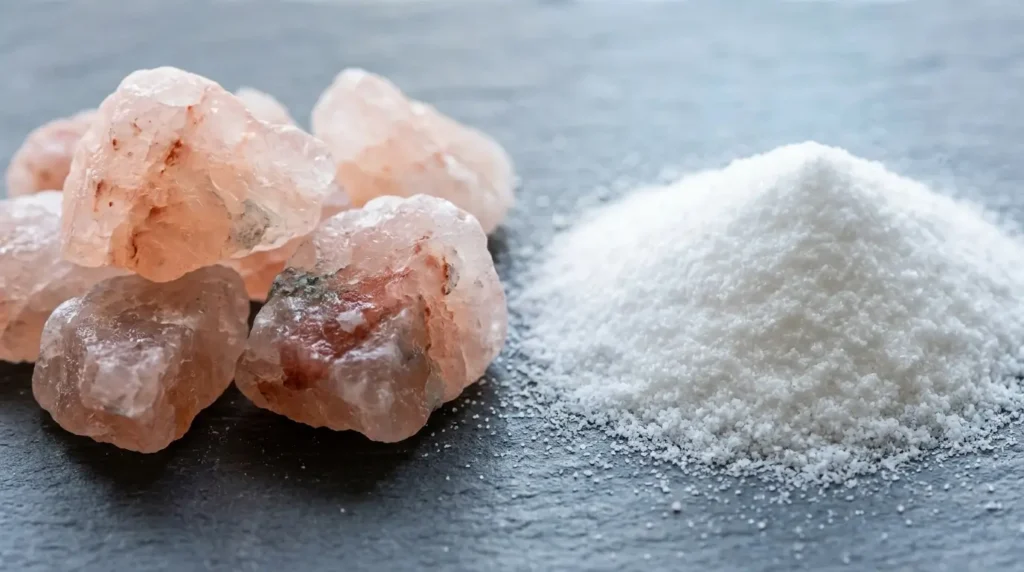
Not all the iodine you might find in salt comes from the same place, and where it comes from affects how much you can count on.
Naturally occurring iodine is whatever trace amount got trapped in a salt deposit as it formed, geologically, over millions of years. Himalayan pink salt is mined from ancient seabed deposits, so it can carry trace minerals — including, occasionally, tiny amounts of iodine — but nothing about that process measures or controls how much ends up in a given batch. Marketing that highlights “80-plus trace minerals” in pink salt is mostly describing minerals like iron, magnesium, potassium, and calcium; when iodine shows up at all, it’s typically at levels too small to matter nutritionally. Our full Himalayan pink salt minerals breakdown covers what’s actually in it and in what amounts.
Added iodine, by contrast, is mixed into salt deliberately during manufacturing, almost always as potassium iodide or potassium iodate, at a controlled, standardized rate. That’s what makes ordinary iodized table salt dependable: you can reasonably estimate how much iodine a given amount will provide.
Because natural trace levels vary so much by mine, batch, and even lab method, they shouldn’t be treated as equivalent to added, standardized iodine. For a broader look at where Himalayan salt comes from and how it’s processed, see our Himalayan pink salt guide.
How Much Iodine Is in Himalayan Pink Salt?
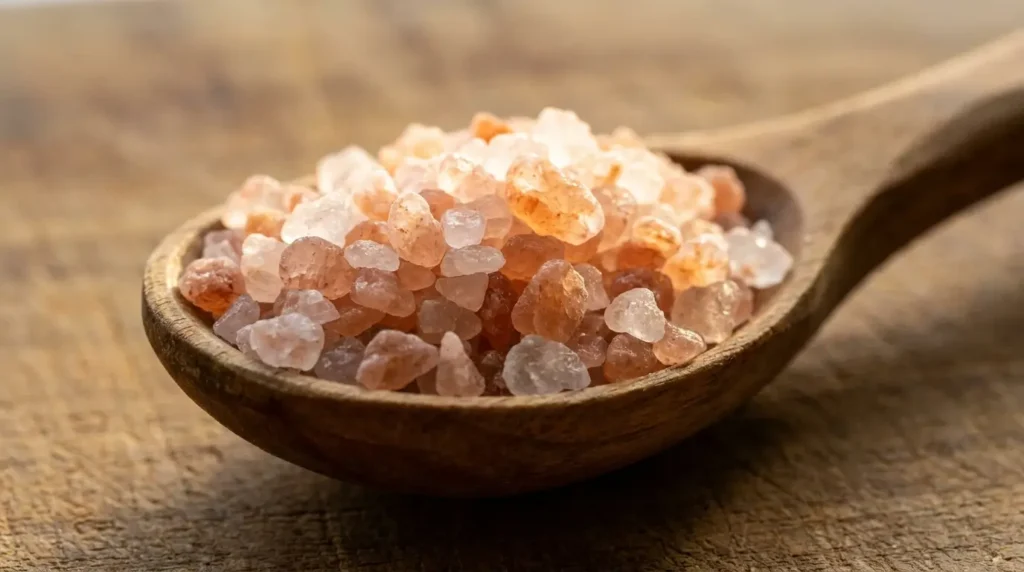
There’s no single, universal number here, and any source that gives you one flat figure for “Himalayan salt” in general is oversimplifying. Because it’s an unrefined, minimally processed salt taken straight from a geological deposit, its trace mineral profile — iodine included — can vary between mines, rock layers, and even individual batches.
What is well established is the category it falls into. NIH groups Himalayan salt with other specialty salts — sea salt, kosher salt, and fleur de sel — that usually contain little or no iodine. As a benchmark for that category, NIH’s own food composition data shows that a quarter teaspoon of non-iodized sea salt provides essentially no measurable iodine, compared with about 78 mcg from the same amount of iodized table salt. Independent testing of individual pink salt brands tends to turn up similarly small and inconsistent amounts.
In practice, that means you shouldn’t rely on Himalayan pink salt as your main or only source of iodine. If a specific brand has been lab-tested and labeled with an iodine value, that number applies to that product alone — not to Himalayan salt as a category.
How Much Iodine Is in Iodized Table Salt?
Iodized table salt has a known, standardized iodine content because manufacturers add it on purpose. In the United States, it’s labeled to contain about 45 mcg of iodine per gram of salt; when researchers have actually measured store-bought samples, the average has run slightly higher, around 47.5 to 50.7 mcg per gram.
In everyday kitchen terms, according to NIH’s food composition data:
- ¼ teaspoon of iodized table salt provides about 78 mcg of iodine (roughly 52% of the adult Daily Value)
- ½ to ¾ teaspoon covers most of an adult’s daily 150 mcg requirement
Two things affect how much you actually get from a given shake of salt. First, U.S. manufacturers mostly use potassium iodide, while the NIH’s clinical fact sheet on iodine notes that the World Health Organization recommends potassium iodate instead for national iodization programs, since it holds up better in warm, humid, or tropical conditions. Second, storage matters no matter which form is used: heat, light, moisture, and time on the shelf can all reduce the iodine that’s actually left in the salt by the time it reaches your food. The number on the label is a starting point, not a guarantee.
How to Tell Whether Your Pink Salt Is Iodized
The packaging is the only reliable way to know. Here’s what to check:
- Look for the word “iodized” on the front of the package or in the product name.
- Check the ingredient list or Nutrition Facts panel for potassium iodide or potassium iodate.
- Don’t assume “mineral-rich,” “natural,” “unrefined,” or “gourmet” means iodine-rich. Those describe entirely different qualities.
- If none of the above appear, treat the product as non-iodized — which is the default for most Himalayan pink salt, sea salt, and kosher salt on the market.
A small number of brands do sell iodine-fortified pink salt as a specialty product, but it’s the exception, and it will always say so on the label.
Why Iodine Is Added to Table Salt in the First Place
Iodine is a trace mineral your body needs to make thyroid hormones, which regulate metabolism and are essential for normal brain and bone development during pregnancy and infancy. Without enough iodine, the thyroid can’t produce these hormones properly — which is why iodine deficiency has historically been linked to goiter (an enlarged thyroid) and, in severe cases, developmental problems in children.
In the United States, salt manufacturers have voluntarily added iodine to table salt since the 1920s, largely to address widespread goiter in areas with iodine-poor soil, including the historic “goiter belt” around the Great Lakes. Dozens of other countries now run similar salt-iodization programs. Interestingly, NIH also lists mountainous regions — including the Himalayas, along with the Alps and Andes — among the most iodine-poor areas in the world for modern soil and food supply. That’s a separate, geographic reason iodine fortification has mattered so much in those parts of the world; it doesn’t tell you anything about the iodine content of an ancient rock-salt deposit mined from the same mountains.
None of this adds up to a complete picture of thyroid health, which involves far more than iodine alone. It’s simply the reason iodine ended up in salt shakers in the first place.
Can You Use Himalayan Salt and Still Get Enough Iodine?
Yes. Plenty of people cook exclusively with Himalayan pink salt and still meet their iodine needs, as long as they’re getting it from somewhere else. Good dietary sources of iodine, according to NIH food composition data, include:
| Food | Iodine per serving | % Daily Value |
|---|---|---|
| Cod, baked (3 oz) | 146 mcg | 97% |
| Greek yogurt, plain, nonfat (¾ cup) | 87 mcg | 58% |
| Milk, nonfat (1 cup) | 84 mcg | 56% |
| Iodized table salt (¼ tsp) | 78 mcg | 52% |
| Egg, hard-boiled (1 large) | 31 mcg | 21% |
| Shrimp, cooked (3 oz) | 13 mcg | 9% |
Seaweed — kelp, nori, wakame, and similar varieties — is also an excellent source, but its iodine content varies enormously by species and origin, which makes it harder to estimate precisely than the foods above.
This isn’t personalized dietary advice; how much iodine any one person needs depends on age, pregnancy status, and overall diet (more on that below). But as a general rule, a diet that includes some seafood, dairy, or eggs — or a shaker of iodized salt alongside your Himalayan salt — comfortably covers it for most healthy adults.
Himalayan Pink Salt vs. Iodized Table Salt
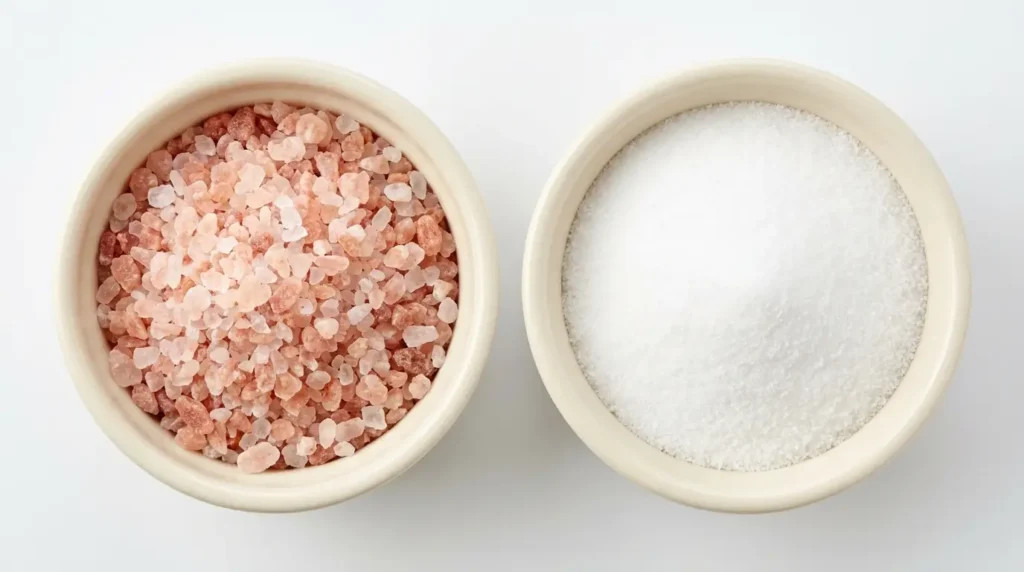
| Feature | Himalayan pink salt | Iodized table salt |
|---|---|---|
| Usually iodized | No | Often |
| Reliable iodine source | No | Yes, when labeled |
| Main component | Sodium chloride | Sodium chloride |
| Trace minerals | Variable | Usually minimal |
| Culinary use | Cooking and finishing | Everyday cooking |
Iodine aside, the two salts differ mainly in processing and how they’re used in the kitchen — not in sodium content, which is nearly identical gram for gram. For a fuller side-by-side that goes beyond iodine, see our pink salt vs. table salt comparison. Sea salt follows a similar iodine pattern to Himalayan salt; we break that down separately in pink salt vs. sea salt. And if you’re mainly reaching for Himalayan salt for flavor rather than fortification, our guide to cooking with pink salt has ideas for where it shines.
Who Should Pay Closer Attention to Iodine Intake?

How much iodine you need depends on your age and life stage. Here are the average daily recommended amounts, according to the NIH Office of Dietary Supplements:
| Life stage | Recommended amount |
|---|---|
| Birth to 6 months | 110 mcg |
| Infants, 7–12 months | 130 mcg |
| Children, 1–8 years | 90 mcg |
| Children, 9–13 years | 120 mcg |
| Teens, 14–18 years | 150 mcg |
| Adults | 150 mcg |
| Pregnant teens and women | 220 mcg |
| Breastfeeding teens and women | 290 mcg |
Most people who eat a varied diet don’t need to think much about iodine day to day. A few groups benefit from paying closer attention, especially if they’ve also switched entirely to non-iodized specialty salts:
- Pregnant and breastfeeding women. Iodine needs rise substantially, since iodine is essential for a baby’s brain development.
- People who eat little or no seafood, dairy, or eggs, including many vegans and those with dietary restrictions, since these are among the most reliable food sources of iodine.
- Anyone who has fully replaced iodized salt with Himalayan, sea, or kosher salt without adding iodine-rich foods elsewhere in their diet.
None of this means you’re definitely low on iodine — only that these groups have less margin for error. If you fall into one of them and you’re concerned, a doctor or registered dietitian can look at your diet or order testing; this article isn’t a substitute for that conversation.
The Bottom Line: Does Himalayan Pink Salt Have Iodine?
Himalayan pink salt may carry trace, naturally occurring iodine, but it is not usually iodized, and it shouldn’t be treated as a dependable iodine source. If iodine intake matters to you — because you’re pregnant, avoid seafood and dairy, or use only specialty salts — check the label, keep a shaker of iodized salt in the rotation, or lean on other iodine-rich foods.
That doesn’t mean you need to pick one salt over the other for health reasons. The World Health Organization treats reducing overall sodium intake and using iodized salt as compatible public-health goals, not opposing ones — so if iodine is a gap for you, the fix is usually small: a pinch of iodized salt, a serving of dairy or seafood, or a quick label check. Iodine is only one part of the picture, too; for the rest of what pink salt does and doesn’t offer, see our guide to Himalayan pink salt benefits.
Frequently Asked Questions
Almost always, yes. Iodine isn’t part of how Himalayan pink salt is typically processed, so unless a label specifically says “iodized” or lists potassium iodide or potassium iodate, assume it isn’t.
Yes. There’s nothing stopping a manufacturer from adding iodine to pink salt, and a small number of brands do sell fortified versions as a specialty product. It’s uncommon, so check the label rather than assuming either way.
No, not reliably. Any natural iodine it contains shows up in amounts too small and inconsistent to count on for meeting your daily needs.
Generally not, for the same reason as Himalayan salt. NIH groups sea salt among the specialty salts that are usually left non-iodized, and food composition testing shows non-iodized sea salt provides essentially no measurable iodine per serving.
Look at the front label for the word “iodized,” then check the ingredient list or Nutrition Facts panel for potassium iodide or potassium iodate. If neither appears, treat the salt as non-iodized.
No. Sodium and chloride are the two elements that make up salt (sodium chloride) and are mainly linked to blood pressure and fluid balance. Iodine is a separate trace mineral needed for thyroid hormone production. A salt can be high in sodium and still contain no iodine unless it’s been specifically fortified.