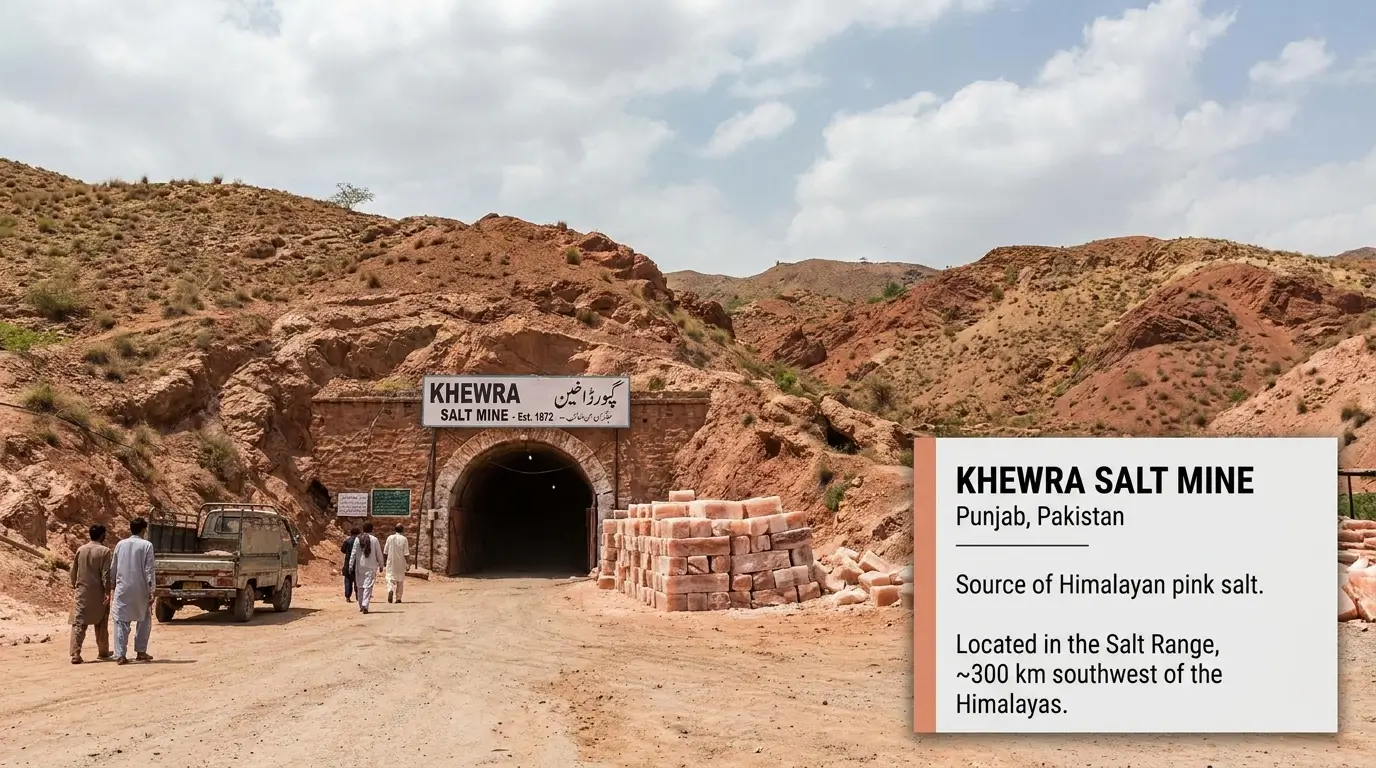
Himalayan pink salt comes from the Khewra Salt Mine in Punjab, Pakistan — a single underground deposit in the Salt Range mountains, approximately 160 kilometers south of Islamabad. Virtually every bag, grinder, or slab of Himalayan pink salt sold anywhere in the world originates from this one location.
That is the complete geographic answer. The geology behind it — how an ancient ocean became the world’s most recognizable specialty salt — is worth understanding in detail, because it explains exactly what you are buying and why the product is what it is.
The One-Sentence Answer
Himalayan pink salt comes from the Khewra Salt Mine, Punjab Province, Pakistan, where it has been mined from a 600-million-year-old rock salt deposit for at least seven centuries.
Where Khewra Actually Is
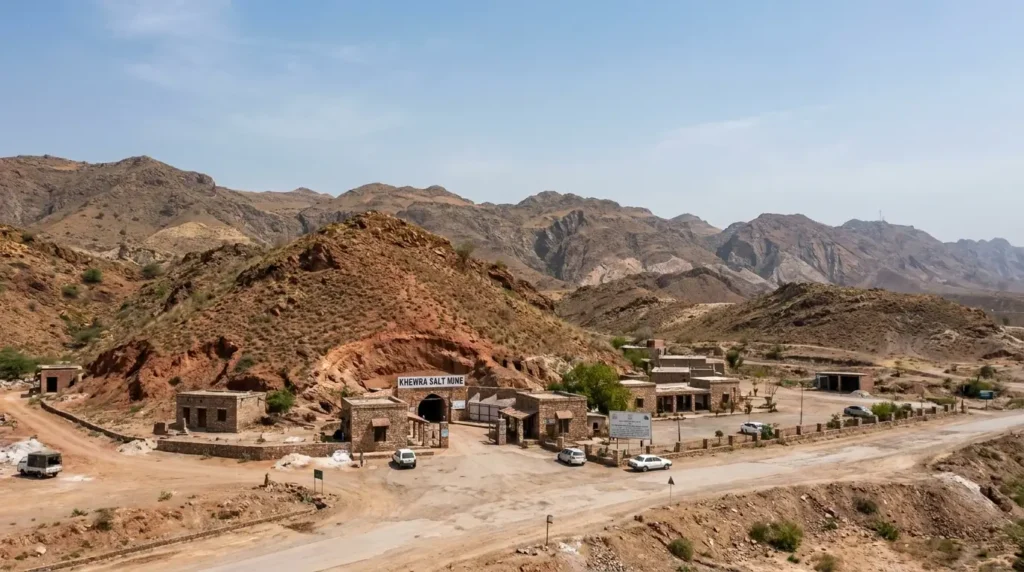
The Khewra Salt Mine sits at the foot of the Salt Range — a 186-mile chain of hills and low mountains running east to west through northern Punjab, Pakistan. The town of Khewra itself lies roughly:
- 160 km south of Islamabad, Pakistan’s capital
- 300 km southwest of Kashmir, near the edge of the Himalayan range
- 260 km east of Lahore, Punjab’s largest city
To put the geography plainly: Khewra is not in the Himalayan mountain range. The Himalayas are a distinct geological formation further to the northeast, running through northern Pakistan, India, Nepal, and Bhutan. The Salt Range and the Himalayan range are separated by hundreds of kilometers and were formed by related but distinct geological processes.
This matters because the name “Himalayan pink salt” creates a strong geographic impression that is not quite accurate. The salt is from Pakistan, from the Salt Range, from a specific mine that has been documented and mapped in detail by the Pakistan Mineral Development Corporation (PMDC) — the government body that oversees mineral extraction in Pakistan, including salt production at Khewra. When you see “Product of Pakistan” on a pink salt label, that is the accurate origin statement. “Himalayan” is a regional marketing convention, not a precise geographic descriptor.
The dedicated article on whether Himalayan salt is really from the Himalayas examines this naming question at length — including why the name stuck, whether it constitutes misleading labeling, and what the PMDC and food regulators say about it.
How a 600-Million-Year-Old Ocean Became Salt
The story of where Himalayan pink salt comes from begins long before the Himalayas existed — before the Indian subcontinent had even drifted to its current position.
The Precambrian Sea
Approximately 600 million years ago, during the late Precambrian era, the landmass that would become South Asia was positioned near the equator, partially covered by a warm, shallow inland sea. This was not the open ocean. It was a semi-enclosed body of water, similar in character to today’s Persian Gulf or Red Sea — shallow, warm, and in a climate zone that promoted rapid evaporation.
As that sea gradually evaporated over geological time, it left behind thick, layered deposits of the minerals it had held in solution. Sodium chloride — table salt — was the dominant deposit. But the evaporating water also left behind calcium sulfate (gypsum), magnesium salts, potassium compounds, and iron-bearing minerals. These were the trace elements that would eventually give the salt its pink color.
Burial and Preservation
After the sea disappeared, the salt deposits were gradually covered by sediment — sand, silt, and eventually rock — as the region’s geology continued to evolve. Burial protected the salt from dissolution by rain and surface water. Over millions of years, the weight of overlying sediment compressed the salt and the surrounding rock, creating the dense, hard mineral deposit that miners encounter today.
The critical event in the deposit’s history came roughly 50 million years ago, when the Indian tectonic plate collided with the Eurasian plate. This collision — one of the most significant geological events in the planet’s recent history — is what built the Himalayan mountain range. It also dramatically altered the geology of the broader region, folding and faulting the rock layers throughout what is now Pakistan and northern India.
For the salt deposit, the collision had two effects. First, it pushed the Salt Range upward, exposing the edges of the deposit at the surface — which is why the ancient inhabitants of the region were able to discover the salt in the first place, without the need to drill or excavate deep underground. Second, the tectonic compression sealed the deposit even more effectively, locking in the trace minerals and preventing contamination from surface water.
Why the Salt Has Been Preserved So Well
The geological isolation of the Khewra deposit is the legitimate scientific basis for the “purity” claims commonly made about Himalayan salt. Because the deposit has been sealed from the surface environment for hundreds of millions of years, it has not been exposed to:
- Modern ocean pollutants or microplastics
- Industrial runoff or agricultural chemicals
- Airborne contamination from fossil fuel combustion
This does not mean the salt is chemically pure in the sense of being pure sodium chloride — it contains trace minerals throughout. But it does mean the contaminants that have become a concern in sea salts harvested from modern oceans are genuinely absent. Independent testing of Khewra salt consistently confirms this.
Why It Is Still Called “Himalayan”
The marketing name “Himalayan pink salt” emerged and gained traction in Western markets — primarily the United States, Europe, and Australia — during the 2000s and 2010s, as specialty salts became a significant category in the food and wellness industries.
Several factors converged to make “Himalayan” the name that stuck:
Geographic proximity branding. The Salt Range sits in a region that is culturally and historically associated with the greater Himalayan world — the civilizations, trade routes, and landscapes of the high mountain zone that stretches across South and Central Asia. Calling the salt “Himalayan” invoked that association even if the mine itself is not in the mountains.
Altitude and purity associations. “Himalayan” carries connotations of height, remoteness, and purity in Western consumer culture — associations that made it a natural fit for a product being marketed as a cleaner, more natural alternative to processed table salt.
No competing standard. There is no international regulatory standard for what “Himalayan salt” must mean geographically. Food labeling regulations in most countries require accurate country of origin (“Product of Pakistan”) but do not regulate the use of regional descriptors like “Himalayan.” This created space for the name to spread without legal challenge.
The name is now universal in the industry. Pakistani salt exporters, international distributors, and retail brands all use it. The Pakistan Mineral Development Corporation acknowledges Khewra as the source of what the global market calls Himalayan salt, even though the mine is not technically in the Himalayas.
For a full examination of this naming question — including whether it constitutes misleading labeling under different regulatory frameworks — see the article on whether Himalayan salt is really from the Himalayas.
Other Pink Salt Deposits Around the World
Khewra is the dominant global source of Himalayan pink salt, but it is not the only pink rock salt deposit in the world. A few others are worth knowing:
Maras Salt Pans, Peru. The Maras salt terraces in Peru’s Sacred Valley are not a rock salt mine — they are evaporation pools fed by naturally salty spring water. The salt produced there ranges from white to pale pink to orange, depending on mineral content. Maras salt is a genuine specialty product sold through gourmet retailers, harvested using traditional methods that date to the Incan period. It is not related to Himalayan salt geologically or chemically, but it falls loosely in the “pink salt” category by color.
Murray River Salt, Australia. Produced from ancient underground brine deposits in South Australia, Murray River salt has a soft pink-to-apricot color from trace minerals in the brine. It is a legitimate artisan finishing salt with a strong regional following, though it is not widely available internationally.
Other claimed “Himalayan” sources. Some products on the market claim Himalayan origin but are not sourced from Khewra. Pakistani salt industry data indicates that Khewra dominates global production to the point where virtually all commercially available “Himalayan pink salt” is Khewra salt. Products claiming alternative Himalayan sources without specific mine identification should be scrutinized carefully.
The practical implication: when you are buying Himalayan pink salt and the label says “Product of Pakistan,” you can be confident about the general origin. When it says “Product of [any other country],” it is either a different salt entirely or a re-packaged product where the actual mine source may be opaque. Our guide to spotting fake Himalayan pink salt covers how to read labels and verify provenance.
The Khewra Mine Today
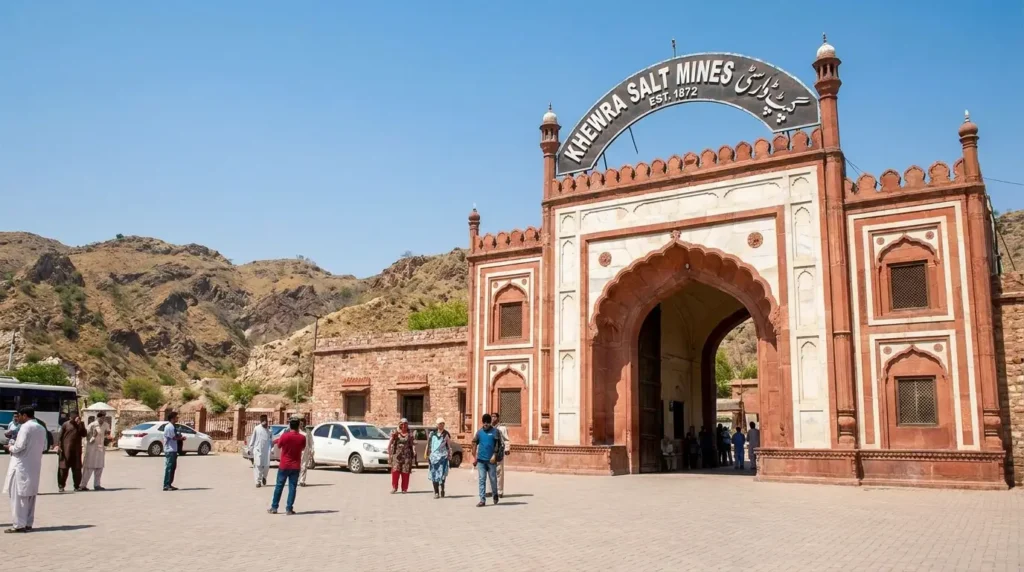
The Khewra Salt Mine is operated under the oversight of the Pakistan Mineral Development Corporation and is one of the country’s largest single mineral extraction operations. Annual production runs into the hundreds of thousands of tonnes — a fraction of the deposit’s estimated reserves, which the PMDC has calculated could sustain current extraction rates for hundreds of years.
Beyond its industrial significance, Khewra has become one of Pakistan’s most-visited tourist attractions. The mine’s interior includes a salt mosque (built entirely from pink salt bricks), cathedral-like chambers, an illuminated underground lake, and a narrow-gauge railway that carries visitors through multiple levels. An estimated 300,000 people visit per year, making it a significant part of Punjab’s tourism economy.
For a complete guide to the mine’s history, its interior features, how the extraction process works at scale, and practical information for visiting — including how to arrange a tour and what to expect underground — see the full Khewra Salt Mine guide.
The origin story of Himalayan pink salt is, in the end, a straightforward one: an ancient sea, a geological accident of burial and preservation, and a mine in the Punjab hills that has been supplying the world with this distinctive salt for centuries. The name may be imprecise. The salt itself is exactly what it is claimed to be — and understanding where it actually comes from only adds to its interest as an ingredient.