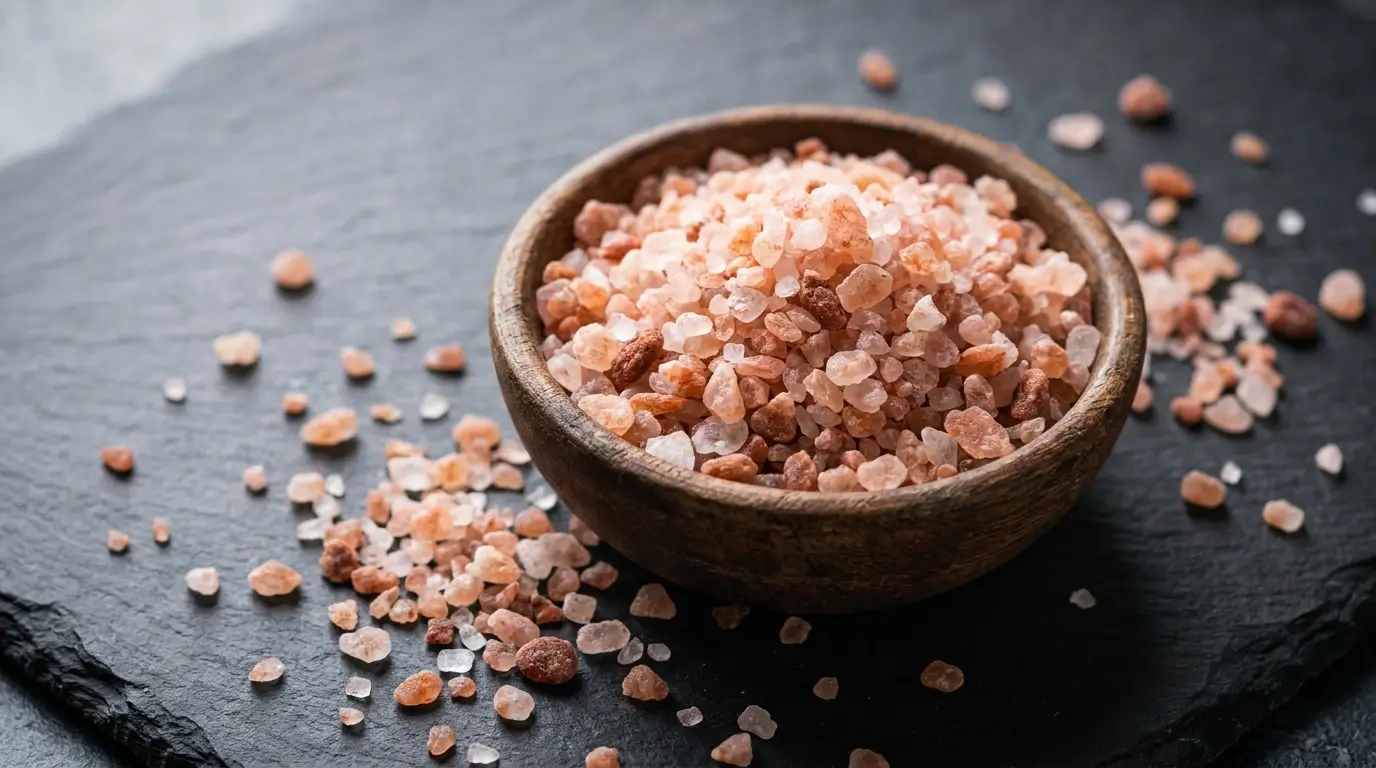
Himalayan pink salt shows up in steak rubs, artisan chocolate, and the pantries of wellness influencers who swear it’s healthier than ordinary table salt. This guide sorts fact from marketing and focuses specifically on eating Himalayan pink salt: what’s actually in it, which Himalayan pink salt benefits are backed by real evidence, and where the health claims fall apart. (Looking for Himalayan salt lamps or salt cave and halotherapy sessions instead? Those work differently and have their own guides.)
Is Himalayan Pink Salt Good for You?
Yes, in moderation — but not for the reasons most marketing suggests. Himalayan pink salt is a legitimate, minimally processed seasoning, not a health supplement. Here’s the short version:
- It seasons food and works well as a finishing salt, exactly like any other salt.
- Sodium, its main component, is essential in small amounts for nerve and muscle function.
- It contains trace minerals — calcium, potassium, magnesium, iron, and others — that also give it its color.
- Current evidence doesn’t show a meaningful health advantage over table salt, sea salt, or kosher salt.
- Excess sodium remains the main concern, no matter which salt you use.
Keep those five points in mind; the rest of this article fills in the why.
What Himalayan Pink Salt Contains
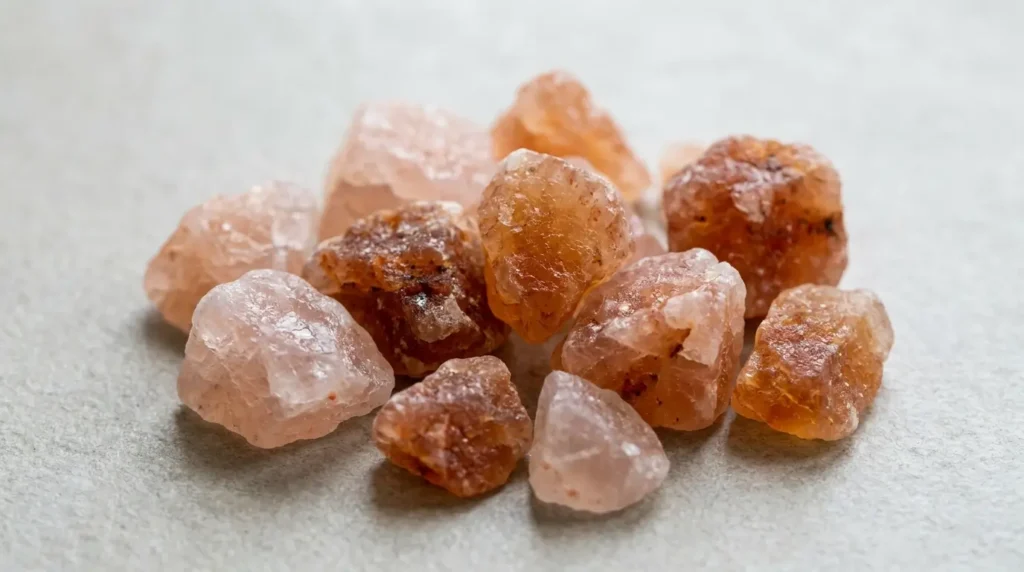
Himalayan pink salt is rock salt (halite) mined mostly from the Khewra Salt Mine in Pakistan’s Salt Range, one of the oldest and largest salt deposits in the world. Like all salt, it’s overwhelmingly sodium chloride — typically in the mid-to-high 90s percent by weight. The remainder is a mix of trace minerals (more on those shortly) plus a bit of natural moisture. Iron oxide — essentially rust — is what gives the salt its pink-to-reddish color; darker samples generally carry more trace minerals.
Unlike much of the table salt sold in the US, pink salt typically isn’t fortified with iodine. That’s a meaningful practical difference, and we cover it in more detail in the risks section below.
Himalayan Pink Salt Benefits: Claims vs. Evidence
Marketing copy and dinner-table folklore make a lot of claims about pink salt. Here’s how each one actually stacks up:
| Common Claim | Evidence Level | Practical Takeaway |
|---|---|---|
| Provides essential minerals | Technically true, but amounts are small | Not a substitute for a mineral supplement |
| Improves hydration | Context-dependent | Most people just need plain water |
| Balances electrolytes | Mostly just supplies sodium | Not a complete electrolyte product |
| Improves digestion | Insufficient evidence | Don’t rely on it for this |
| Detoxifies the body | Unsupported | Avoid this claim entirely |
| Supports weight loss | Unsupported | No proven fat-loss effect |
| Lower in sodium | Not meaningfully, by weight | Crystal size can affect teaspoon measurements |
| Healthier than table salt | Not established | Iodized table salt may be the better pick for some people |
Benefit 1: Flavor and Texture
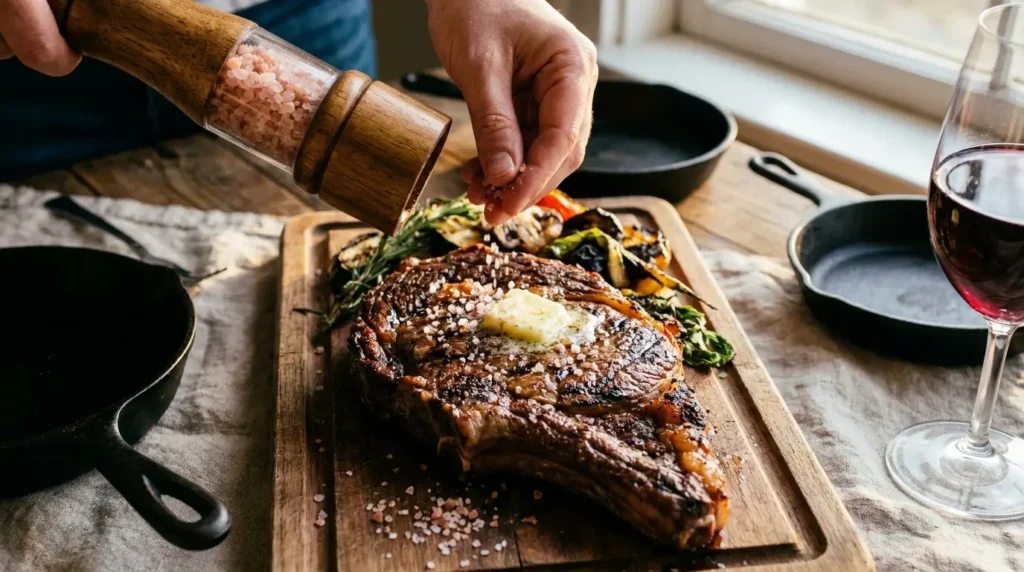
This is one area where the advantages are genuinely uncontroversial. Himalayan pink salt is a legitimately nice salt to cook and finish with:
- Color: the pink-to-rust hue looks striking in a grinder or on a plate.
- Texture: coarser grinds add a satisfying crunch and a slower burst of saltiness than fine table salt.
- Finishing uses: many cooks add it at the end of cooking — on steak, roasted vegetables, or chocolate — where crystal shape matters more than when it’s dissolved during cooking.
- Grain options: it’s sold in fine, coarse, and flake forms, so you can match the grind to the dish.
These are real, legitimate reasons to reach for it. Just keep the benefits of cooking with Himalayan salt separate from any health claims: a salt can be a better finishing salt without being a better-for-you salt. For more ideas on using it well, see our guide to cooking with pink salt.
Benefit 2: Minimal Processing
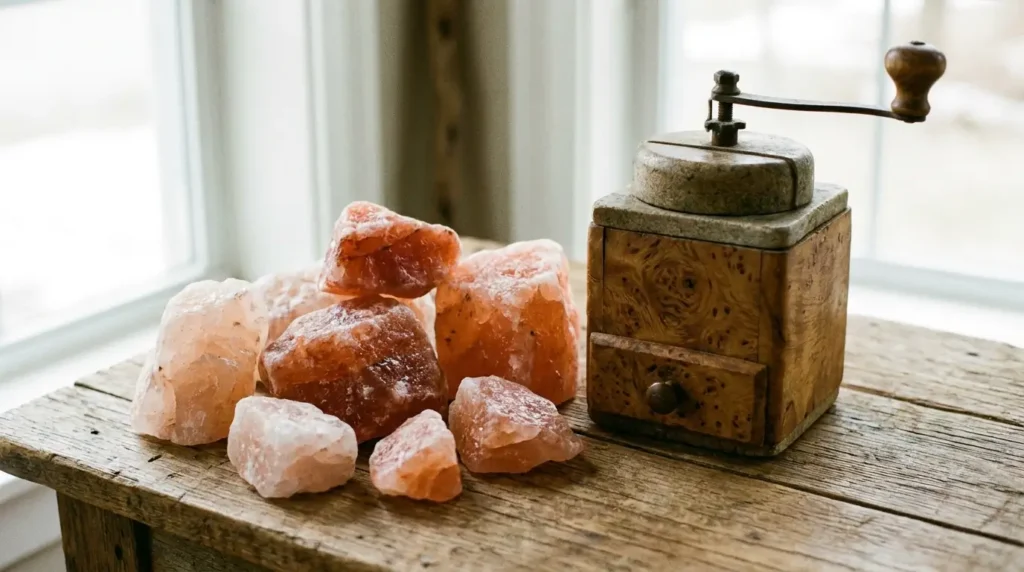
Himalayan pink salt is typically just mined, crushed, and sorted by size — no bleaching, no anti-caking agents, and usually no iodine fortification. That’s what “minimally processed” means here: fewer industrial steps between the rock and your shaker.
Minimally processed isn’t automatically the same as healthier, though. The extra steps used in refined table salt, like adding anti-caking agents or iodine, exist for food-safety and public-health reasons, not to make the product worse. Iodine fortification, in particular, solves a real nutritional gap for people who don’t get iodine from other foods. “Less processed” is a legitimate preference for taste or ingredient simplicity — it just isn’t, on its own, a health benefit.
Benefit 3: Trace Minerals
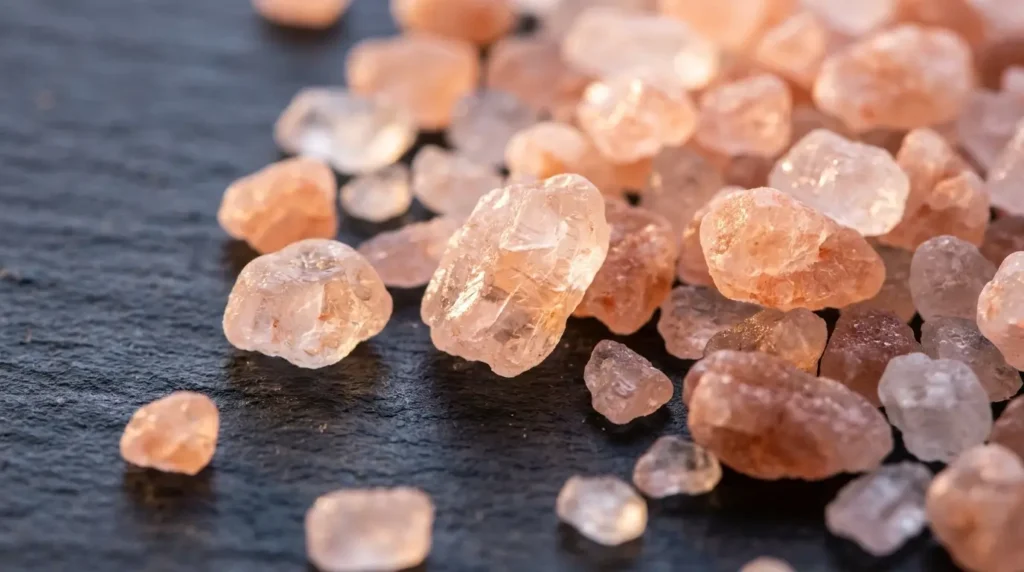
Pink salt does contain more measurable trace minerals than refined white table salt. A 2020 peer-reviewed analysis of 31 retail pink salts in Australia found meaningfully higher levels of calcium, iron, magnesium, manganese, and potassium compared with an iodized table salt control. That part of the marketing is accurate.
Where it falls apart is the amount. In that same analysis, a single teaspoon (about 5 grams) of pink salt supplied roughly 13 mg of calcium, 13 mg of magnesium, 12 mg of potassium, and well under 1 mg of iron — a small fraction of a percent of what adults need in a day for any of them. The researchers estimated you’d need to eat more than 30 grams of pink salt a day (about 6 teaspoons) before the minerals added up to anything nutritionally meaningful — and at that point, sodium alone would run to roughly six times the WHO’s recommended daily limit. In practical terms: presence isn’t the same as a meaningful dose. See our full mineral-by-mineral breakdown of Himalayan pink salt mineral content for the numbers on every trace element tested.
Does Pink Salt Improve Hydration?
Sodium is genuinely one of the body’s key electrolytes, and it plays a real role in fluid balance — that’s the kernel of truth behind the marketing. But for most people eating a typical diet, extra sodium from salt doesn’t meaningfully improve hydration; plain water, plus the sodium already in food, covers it.
Where sodium replacement does matter is heavy sweating: long endurance exercise, hot-weather labor, or workouts well over an hour. Athletes in those situations may benefit from electrolyte replacement, but that’s a specific, situational need, not a reason for the average person to add extra salt to their water. If a doctor has put you on a medically supervised sodium or fluid plan, follow that guidance over any general advice, including this article. Curious about the specific practice of dissolving pink salt in water first thing in the morning? We cover that separately in our guide to Himalayan salt in water.
Does Himalayan Salt Help With Digestion or Detoxing?
No good evidence supports either claim. Your liver and kidneys handle detoxification on their own, and there’s no clinical evidence that pink salt, salt water, or “sole water” speeds that process up or removes toxins your organs don’t already clear. The same goes for digestion: there’s no controlled research showing pink salt improves gut function, so treating it as a digestive aid isn’t something the evidence backs up.
This is a case where wellness marketing and clinical evidence point in different directions. If you’re dealing with ongoing digestive symptoms, that’s worth raising with a doctor or registered dietitian rather than solving with a specific salt.
Is Himalayan Pink Salt Good for Weight Loss?
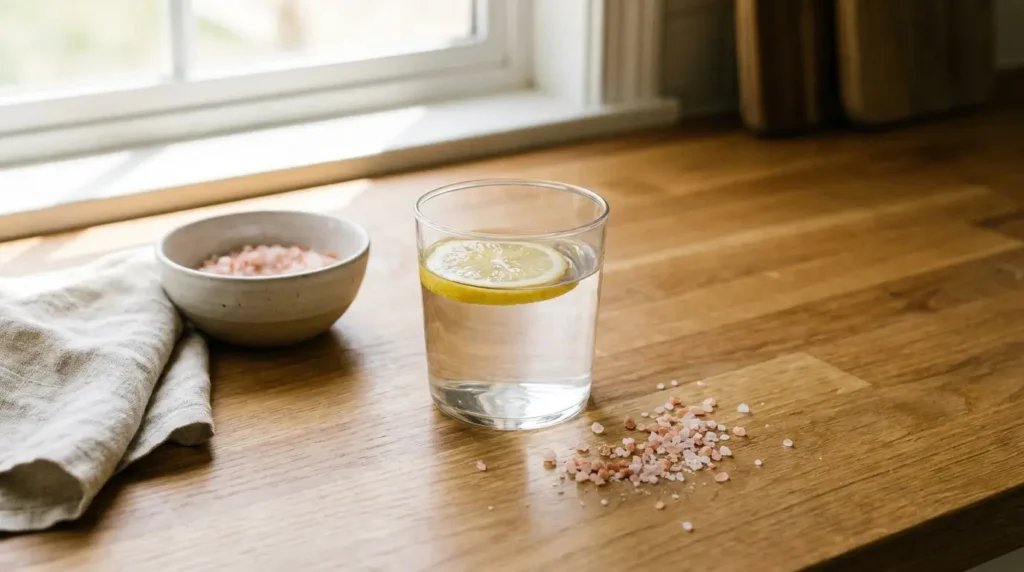
No. There’s no research showing Himalayan pink salt burns fat, boosts metabolism, or otherwise helps with weight loss. The most visible version of this claim is the “pink salt trick,” a viral drink mixing pink salt, water, and usually lemon, which dietitians and fact-checkers have repeatedly found unsupported — and some promotions have used fake celebrity endorsements. If anything, extra sodium can increase water retention rather than reduce it. For a full breakdown of that trend, see our fact-check of the pink salt trick recipe. If you’re working on weight loss, evidence-backed basics — diet quality, activity, sleep, and medical guidance where appropriate — will get you further than any single ingredient.
Risks and Disadvantages
Pink salt isn’t dangerous in ordinary culinary amounts, but it isn’t risk-free either. A few pink salt health risks and downsides are worth knowing before you treat it as a health food:
- High sodium intake: whatever the color, excess sodium is linked to higher blood pressure and increased cardiovascular risk. Pink salt doesn’t get a pass for being pink.
- Lack of reliable iodine: according to the National Institutes of Health, specialty salts — Himalayan pink salt included — typically aren’t iodized, unlike much of the table salt sold in the US. If it’s your primary salt and you don’t regularly eat other iodine sources — dairy, seafood, eggs — that’s worth a look. See iodine in Himalayan salt for the full picture.
- Product variability: mineral and trace-metal content varies significantly between brands and origins. The same 2020 Australian analysis found one non-Himalayan sample exceeded the safety limit for lead, while Himalayan-origin samples in that study actually averaged lower lead levels than salt from other regions. The lesson isn’t that Himalayan salt is uniquely risky — it’s that quality varies by brand, so buying from a reputable source matters.
- Cost: pink salt often costs several times more than plain table salt for what is mostly a culinary upgrade, not a nutritional one.
- Misleading marketing: claims like “84 trace minerals,” along with promises about detoxing or digestion, are common. These figures typically trace back to private lab certificates and marketing copy rather than peer-reviewed nutrition research, which has generally tested around two dozen minerals and found most of them in amounts too small to matter.
- Sodium-restricted diets: if a doctor has advised you to limit sodium — for hypertension, kidney disease, or heart failure, for example — pink salt should be treated exactly like any other salt. The color doesn’t change the sodium math.
You’ll often see two different sodium numbers cited, and they aren’t actually in conflict — they simply come from different guidance frameworks:
| Guidance Source | Recommended Limit for Adults |
|---|---|
| World Health Organization (WHO) | Under 2,000 mg sodium/day (about 5 g salt) |
| FDA Daily Value (Nutrition Facts label) | Under 2,300 mg sodium/day |
Either way, most adults in the US and worldwide currently eat more sodium than either guideline recommends — mostly from processed and restaurant food, not the salt shaker at home.
Himalayan Salt vs Other Salts
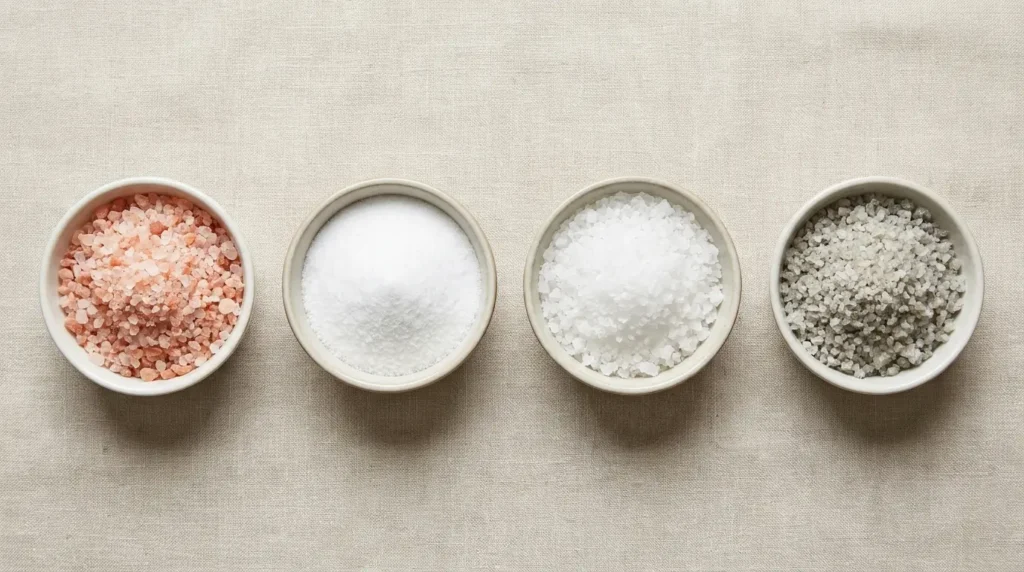
This article focuses on whether pink salt is healthy in general, not on declaring one salt definitively better than another — that full head-to-head comparison lives on our dedicated pages. In short:
- Table salt: more refined and usually iodized, which can make it the better choice if iodine intake is a concern. See our full comparison of Himalayan salt vs table salt.
- Sea salt: evaporated from seawater, with its own variable mineral and moisture content, broadly similar in principle to pink salt.
- Celtic salt (sel gris): a moist, grey, mineral-rich sea salt from France with a different mineral fingerprint than Himalayan salt.
- Kosher salt: a coarse, usually additive-free salt valued by cooks for its texture and easy pinch — nutritionally closer to pink salt than to iodized table salt.
For most people, the decision comes down to taste, texture, and whether iodine matters to your diet — not a meaningful health gap between them.
Bottom Line
The honest answer on Himalayan pink salt benefits is a modest one. It’s a genuinely nice culinary salt — attractive, texturally interesting, minimally processed, and perfectly fine to cook with. It is not a mineral supplement, a detox tool, a weight-loss aid, or a proven upgrade over table salt for most people’s health. If you enjoy how it looks and tastes, keep using it. Just treat it like any other salt: in moderation, alongside a varied diet, without expecting it to do more than season your food.
Frequently Asked Questions
Not in any way the current evidence backs up. Nutritionally, the two are very similar; the most meaningful practical difference is that most table salt is iodized and pink salt usually isn’t. For the complete side-by-side on texture, price, and iodine, see our full comparison of Himalayan salt vs table salt.
Yes, as part of an otherwise normal diet — the same way you’d use any other salt. Use it in moderation and pay attention to total daily sodium from all sources, not just what comes from the shaker.
No, not at typical culinary amounts. The trace minerals are real, but a teaspoon supplies only a small fraction of your daily needs for calcium, magnesium, potassium, or iron. See our full breakdown of Himalayan pink salt mineral content for the exact numbers.
Not in a way that matters nutritionally. Gram for gram, pink salt is still roughly 95–98% sodium chloride. Some lab analyses find it very slightly less concentrated than heavily refined table salt, but the bigger factor is how you measure it: a teaspoon of coarse pink salt has larger crystals and more air gaps, so it can weigh — and contain — less sodium than a teaspoon of fine table salt. That’s a measuring quirk, not a genuine sodium reduction.
Usually not. Like most specialty salts — sea salt, kosher salt, Celtic salt — Himalayan pink salt typically isn’t fortified with iodine, unlike much of the table salt sold in the US. If pink salt is your main salt, make sure you’re getting iodine from other sources, such as dairy, seafood, or eggs. See iodine in Himalayan salt for more detail.
Not more than any other combination of sodium and water. For most people doing ordinary daily activity, plain water covers hydration needs just fine. Curious about the specific practice of drinking pink salt dissolved in water each morning? We cover that separately in our guide to Himalayan salt in water.
No. There’s no clinical evidence that pink salt, salt water, or “sole water” enhances detoxification beyond what your liver and kidneys already do on their own.
No. There’s no research supporting a fat-burning or metabolism-boosting effect, including from the viral “pink salt trick” drink. See our fact-check of the pink salt trick recipe for the full picture.