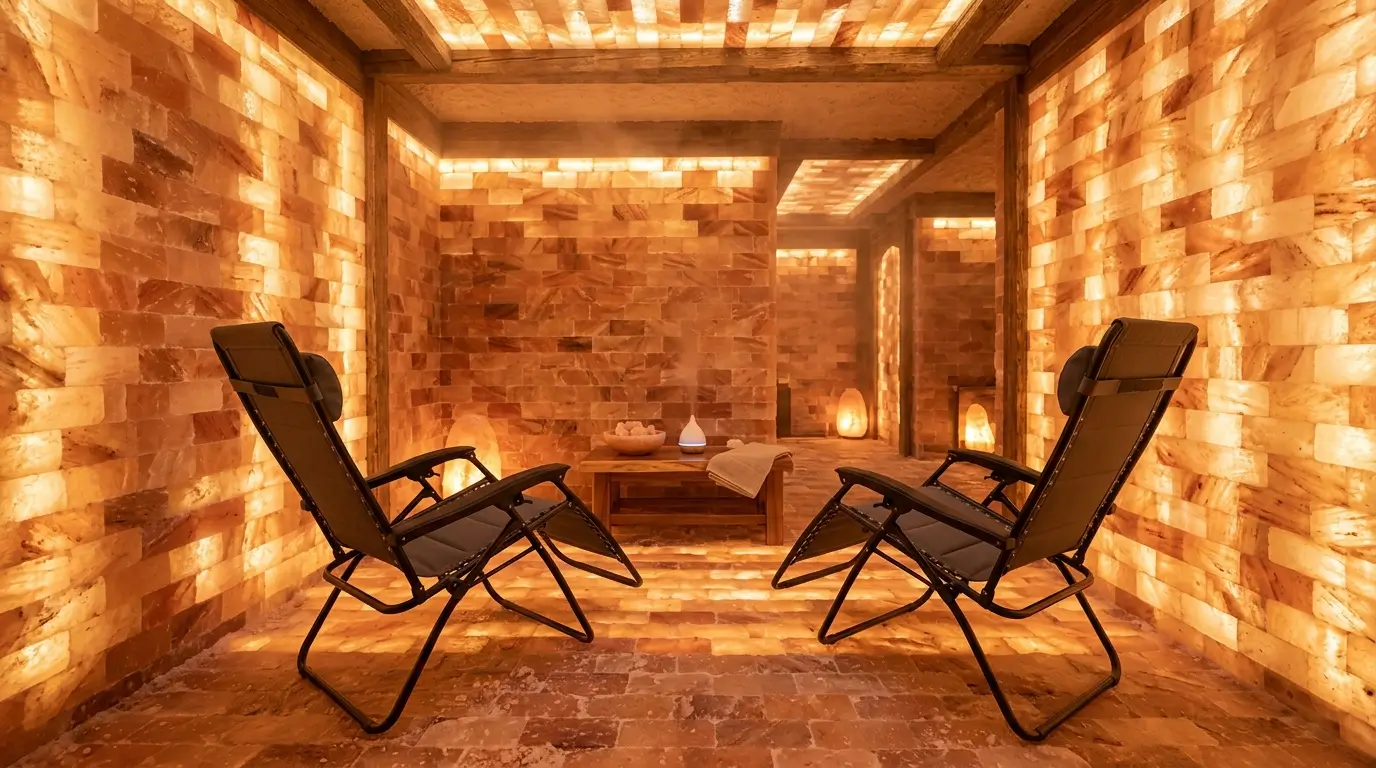
Walk into a modern salt therapy room and the first thing you notice is the hush: no phones, no chatter, just the low hum of a machine pumping fine salt into the air while a few strangers recline in zero-gravity chairs, doing nothing but breathing. That’s a typical pink salt cave halotherapy session, and it has become one of the most-booked additions at spas and wellness studios that have nothing to do with massages or facials. Whether it can actually help you breathe better is a separate question — and one worth answering honestly before you book a spot.
Pink salt cave halotherapy is a wellness treatment where a person sits in a room lined with salt — either a natural cave or a built replica — while a machine called a halogenerator disperses dry, microscopic salt particles into the air. Sessions usually run 30 to 45 minutes. Supporters market it as a natural way to ease breathing, calm skin conditions, and reduce stress, though the clinical evidence behind those specific claims remains thin.
What Is Pink Salt Cave Halotherapy?
The word halotherapy comes from the Greek word for salt, halos. It describes any treatment built around breathing salt-infused air, whether that happens inside a real underground cave or a purpose-built room designed to imitate one.
The practice traces back to 1839, when a Polish physician named Feliks Boczkowski noticed that salt miners at the Wieliczka mine suffered far fewer respiratory problems than workers in other kinds of mines. He opened a health resort inside the mine itself, and the idea that salt-saturated air might ease breathing has been part of European wellness culture ever since.
Most people use “salt cave,” “salt room,” “dry salt therapy,” and “halotherapy” interchangeably today, which is fine in casual conversation. Technically, speleotherapy is the older, narrower term for treatment inside an actual cave or mine, while halotherapy covers the modern version most people encounter at a spa. Pink salt cave halotherapy specifically refers to sessions where pink Himalayan salt is the visible material lining the walls and floor — now the standard look at most Western studios.
Natural Salt Caves vs. Built Halotherapy Rooms
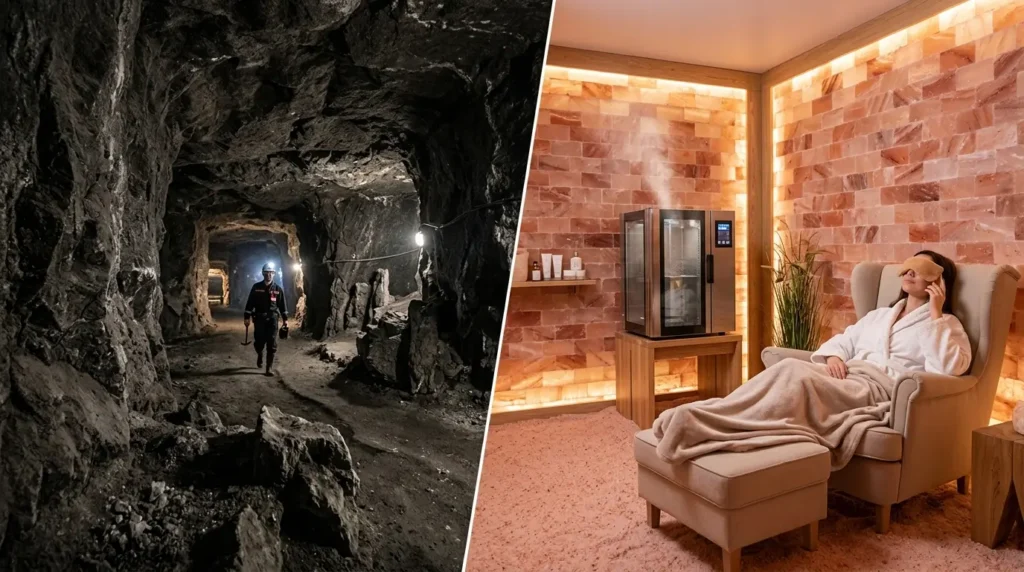
Only a handful of the “salt caves” people visit today sit inside a real underground salt deposit. The overwhelming majority are built rooms designed to mimic that environment, and the difference matters if you’re deciding what to book.
| Feature | Natural Salt Cave (Speleotherapy) | Built Salt Room (Halotherapy) |
|---|---|---|
| Location | Real underground salt mine or cave, mostly in Eastern Europe | Purpose-built room at a spa, gym, or wellness studio |
| How salt reaches the air | Released naturally by the walls and air currents | A halogenerator machine grinds and disperses it |
| Climate control | Fixed by the cave’s natural conditions | Adjustable temperature, humidity, and salt concentration |
| Typical visit | Often part of a multi-day stay at a health resort | A single 30- to 45-minute session |
| Availability | Limited to a few sites worldwide | Widely available in most cities |
Nearly every commercial “pink salt cave” in the United States is the built version. That’s not a criticism — it’s simply useful to know so you’re not expecting an actual cave when you book a session at your local wellness studio.
How Halotherapy Is Supposed to Work
Inside a built salt room, the Himalayan pink salt covering the walls and floor is mostly there for atmosphere. The salt actually released into the air comes from a separate machine called a halogenerator, which grinds pharmaceutical-grade sodium chloride into particles fine enough to stay suspended and reach deep into the airways when inhaled.
This is also why Himalayan salt lamps don’t do the same job, despite looking similar. A lamp just has a bulb warming a chunk of salt — there’s no generator grinding it into an inhalable aerosol, so nothing therapeutic is actually entering the air.
The underlying theory is that these dry, hygroscopic salt particles — meaning they draw in moisture — help loosen mucus, calm airway inflammation, and create a clean, low-allergen environment to breathe in for half an hour. It’s a more concentrated version of the same logic behind why breathing can feel easier at the beach.
That’s the hypothesis. Whether controlled research backs it up is a different question.
What the Research on Pink Salt Cave Halotherapy Actually Shows

The honest answer is: less than the marketing suggests, though not nothing.
An international team of researchers based in Australia, England, and Scotland conducted a systematic review of halotherapy as a treatment for chronic obstructive pulmonary disease, screening 151 studies against strict quality criteria. Only one randomized controlled trial met their bar for inclusion, and the reviewers concluded they could not recommend halotherapy as a COPD treatment based on the evidence available, calling instead for larger, better-designed trials, according to a review indexed in the National Library of Medicine’s database.
The picture looks somewhat more encouraging for asthma, though still far from settled. A comprehensive review covering eighteen studies on halotherapy and asthma in both adults and children found patterns suggesting a possible benefit as an add-on to standard treatment, particularly around reducing flare-ups, while the review’s authors were careful to note that most of the underlying studies were small and would need to be repeated in larger, more rigorous trials before any firm conclusion is possible.
Perhaps the most useful summary comes from a major U.S. respiratory health nonprofit rather than any single study. The American Lung Association has pointed out that there currently isn’t enough evidence-based data to support formal clinical guidelines on salt therapy — meaning no major medical body currently tells doctors when, or whether, to recommend it to patients.
None of this means halotherapy does nothing. It means the research is preliminary, mixed in quality, and nowhere near strong enough to call pink salt cave halotherapy a treatment for any respiratory condition. Anyone managing asthma, COPD, or another chronic lung disease should treat a salt room as a relaxing add-on at most, never a replacement for prescribed medication.
What to Expect at a Pink Salt Cave Halotherapy Session
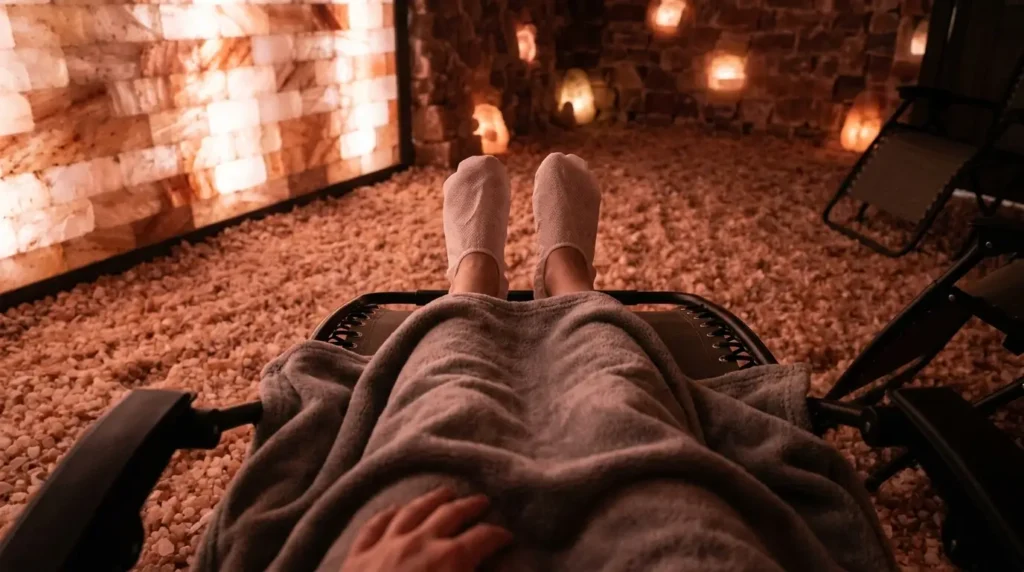
Every studio runs things slightly differently, but a typical visit follows a predictable pattern:
- Check in, remove your shoes, and put on the disposable socks most studios provide — bare feet on the salt floor is normal, but shoes usually aren’t allowed.
- Settle into a recliner or zero-gravity chair inside a dim, quiet room lined with salt blocks or covered in a layer of loose salt crystals.
- The halogenerator runs for the full session, typically 30 to 45 minutes, releasing a fine mist of salt you can’t see or smell.
- Breathe and relax. Some people meditate, nap, or listen to soft music; talking is generally discouraged so the room stays calm for everyone inside it.
- Expect a little throat tickling or a short cough in the first few minutes, especially the first time — it usually settles as the session continues.
- Afterward, brush or shake off any visible salt before getting dressed. Many studios suggest skipping a shower for a few hours to let any effect on the skin keep working.
Walk into a well-run room and the thing that stands out isn’t a smell — dry salt air is essentially odorless — it’s the faint crunch of loose crystals underfoot and the low hum of the generator working somewhere out of sight.
How Much Does a Halotherapy Session Cost?
A single session typically runs $20 to $75 in the United States, with most studios landing in the $35 to $50 range for a 30- to 45-minute visit. A group session in a shared room tends to cost less per person than booking a private room for one or two people.
Most studios also sell multi-session packages or monthly memberships that lower the per-visit price for regular use, which matters if you want to try halotherapy consistently rather than as a one-off. Health insurance rarely covers it, since it’s classified as a wellness or spa service rather than a medical treatment — though a small number of providers will let you apply a flexible spending account or health savings account balance if you have a doctor’s note.
Where to Find a Pink Salt Cave Near You

Most cities now have at least one dedicated salt therapy studio, and halotherapy rooms have started showing up as an add-on inside day spas, yoga studios, and even some gyms. Searching “salt room” or “salt cave” plus your city usually turns up a handful of nearby options.
The pink salt lining most of these rooms travels a long way to get there. A large share of it comes from deposits like Pakistan’s Khewra Salt Mine, the same source behind most Himalayan pink salt sold for cooking. If you’d rather experience the original, non-commercial version of this tradition, working health resorts inside real salt mines still operate in Poland and Ukraine, though visiting one typically means booking a multi-day stay rather than a lunchtime session.
Wherever you book, ask two questions before you pay:
- Does the room actually run a halogenerator, or is the salt purely decorative?
- How long does the session last, and is it private or shared with other guests?
Both answers determine how much salt aerosol you’re actually breathing, regardless of how the walls look.
Who Should Be Cautious About Halotherapy
Halotherapy is generally considered low-risk for healthy adults, but it isn’t risk-free for everyone. Check with a doctor before booking a session if any of the following apply to you:
- You have an active respiratory infection or contagious illness
- You have uncontrolled high blood pressure or a heart condition
- You manage severe asthma, COPD, or another chronic lung disease
- You’re pregnant or considering a session for a young child
So little controlled research exists for pregnancy and early childhood specifically that caution is the safer default, not a reflection of any known danger. The same logic applies to other pink salt wellness trends on this site, like drinking Himalayan salt dissolved in water — appealing traditions, but not substitutes for medical advice.
Mild, temporary throat irritation or coughing is the most commonly reported side effect, and it typically settles quickly once the session ends. Halotherapy should never replace a prescribed inhaler, medication, or treatment plan — treat it, at most, as a relaxing complement to whatever your doctor already recommends.
Should You Try Pink Salt Cave Halotherapy?
Treat it the way you’d treat a sauna or a float tank: a pleasant, low-risk way to unwind for 30 to 45 minutes, not a verified treatment for any medical condition. If you’re mainly looking to relax, unplug for a while, and try something different from a massage, book a session and judge it for yourself — most studios charge $20 to $50, a reasonable price for an afternoon reset.
If you’re managing asthma, COPD, or another chronic respiratory condition and hoping halotherapy will reduce your reliance on medication, talk to your doctor before you book, and keep your expectations modest. The evidence so far suggests it might help as an add-on at best, not as a substitute for anything your doctor has already prescribed. To see where the salt in that room actually comes from and how the rest of the pink salt story fits together, our origins guide picks up from here.