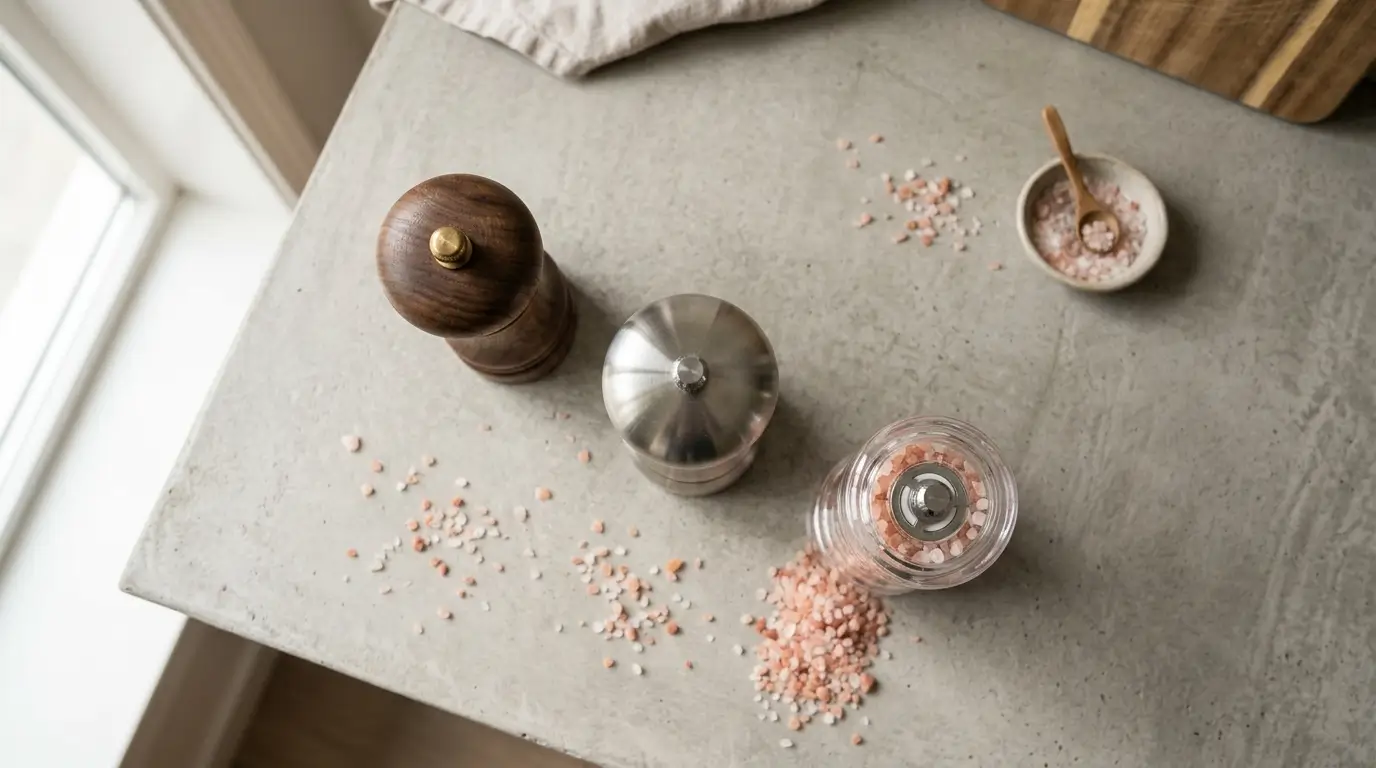
Your pepper mill is seizing up. You loaded it with coarse Himalayan pink salt because it happened to be sitting on the table, and a few weeks later it grinds like it’s full of wet sand, or it starts leaving faint rust flecks in your food. This is one of the most common mistakes home cooks make, and it’s exactly why finding the best pink salt grinder means looking past whatever mill you already own for pepper. Salt and pepper behave completely differently inside a mechanism, and pink salt is especially unforgiving of the wrong one.
A pink salt grinder, often called a salt mill, is a handheld or electric tool that crushes whole Himalayan pink salt crystals into a usable texture using an internal mechanism you turn, crank, or trigger. The best pink salt grinder for Himalayan salt specifically uses a ceramic grinding mechanism rather than plain metal, because ceramic resists the corrosion salt causes over time and holds up against hard mineral crystals far longer than the steel used in most pepper mills.
This guide is part of our ongoing buying guides series and is reader-supported: if you buy through a link here, pinksaltfood.com may earn a small commission at no extra cost to you. Every recommendation below is based on published mechanism specs, manufacturer claims, and patterns in verified owner feedback, not on who pays the highest affiliate rate.
Why Pink Salt Wrecks Ordinary Grinders
Himalayan pink salt is halite, the same mineral as ordinary table salt, rated 2.5 on the Mohs hardness scale, according to geological survey data from the Ohio Department of Natural Resources. That’s soft compared to steel, so hardness by itself isn’t the problem. The damage comes from two other traits. First, pink salt is typically sold as large, irregular chunks rather than the fine, uniform grains of table salt, which puts more mechanical strain on a mechanism built for something smaller. Second, salt is hygroscopic — it pulls moisture from the air — and once a metal mechanism gets even slightly damp, the chloride in the salt starts corroding it from the inside. That shows up as gritty resistance when you turn the mill, rust flecks in your food, or a mechanism that eventually seizes for good.
Pepper mills rarely need to survive this, because pepper is dry and oily rather than corrosive, so manufacturers can build pepper mechanisms from hardened steel without worrying about corrosion. A mechanism marketed for pepper is not automatically safe for salt, whatever the box implies. In my own kitchen, the tell is usually audible before it’s visible: a healthy ceramic mechanism stays smooth for years, while a struggling metal one starts to grind with a faint grit, like sand caught in a hinge.
If you haven’t settled on which crystals to load into your new mill, our guide to the best Himalayan pink salt covers that separately.
How We Evaluated These 6 Grinders
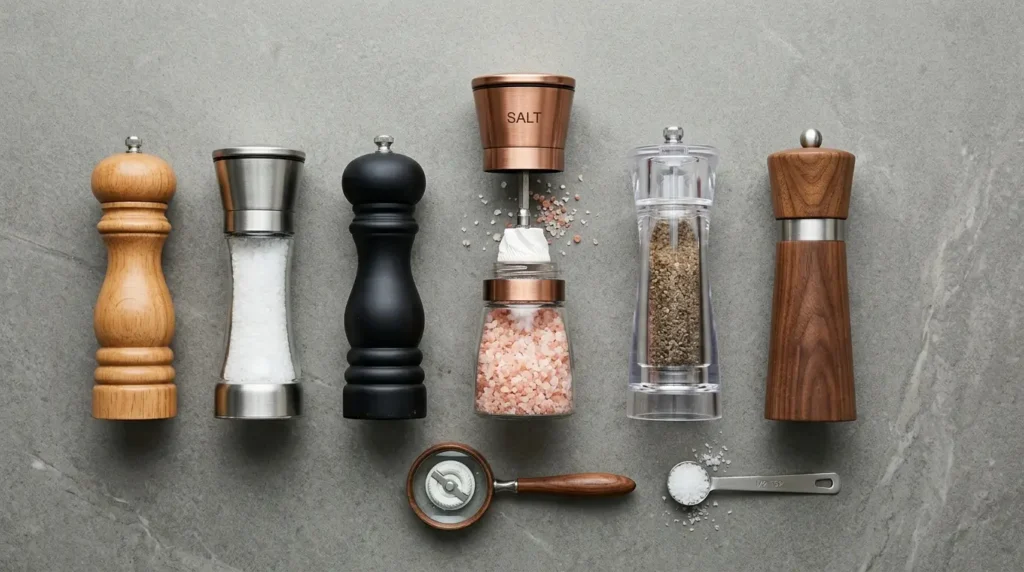
Every grinder here was judged against the same four criteria:
- Mechanism material. What the grinding mechanism is made of, and whether the manufacturer explicitly rates it for salt rather than just pepper or spices.
- Adjustment range. How wide a spread the dial or ring covers, from powder-fine to genuinely coarse.
- Refill design. Whether filling it is a clean pour or a fight with a narrow, awkward opening.
- Warranty on the mechanism itself. Not the body, not the finish — the part that actually touches the salt, since that’s what fails first.
We cross-checked manufacturer claims against patterns in verified owner feedback on retailer sites, since a “ceramic” label means little if the housing around it cracks within a year. Mills marketed only for pepper, or that wouldn’t disclose a mechanism material at all, were excluded outright.
The 6 Best Pink Salt Grinders at a Glance
Five of these earned a dedicated category below. The sixth, a compact ceramic grinder from Kyocera, didn’t win a category outright but is worth knowing about if counter space is tight: it’s small, dishwasher-safe, and priced around $30, though its capacity is too limited for daily cooking in a busy kitchen.
| Grinder | Best For | Mechanism | Grind Settings | Price Tier |
|---|---|---|---|---|
| Cole & Mason Precision+ | Best overall | Diamond-cut ceramic | 3 presets | Mid-range |
| McCormick Himalayan Pink Salt Grinder | Best budget | Built-in ceramic, pre-filled | 3 presets | Under $5 |
| Cole & Mason Hampstead Electronic | Best electric | Ceramic | Push-button, one-handed | Mid-range |
| Peugeot Paris u’Select | Best manual/heirloom | Dedicated corrosion-resistant salt mechanism | 6 presets | Premium |
| HexClad HexMill | Best for coarse crystals | Ceramic components, aluminum body | 10 settings | Premium |
| Kyocera Ceramic Salt Grinder | Best compact | Ceramic | Adjustable dial | Around $30 |
Best Overall Pink Salt Grinder: Cole & Mason Precision+ Salt Mill
Cole & Mason‘s Precision+ mechanism uses a diamond-cut ceramic core built specifically for salt, kept entirely separate from the carbon-steel mechanism in their matching pepper mill so the two are never confused inside one housing. The salt mill offers three preset grind levels, fine enough to finish a dish at the table and coarse enough to hold its texture on grilled meat. The clear acrylic body doubles as a fill gauge, and the mechanism carries a lifetime guarantee, which matters more than almost any other spec once you’re grinding a mineral that corrodes lesser metals. For most kitchens, this is the mill that balances price, durability, and everyday usability without asking you to think about it again.
Best Budget Pink Salt Grinder: McCormick Himalayan Pink Salt Grinder
If you’re not ready to invest in a standalone mill, McCormick’s pre-filled Himalayan Pink Salt Grinder sidesteps the corrosion problem entirely: it’s sold in ordinary grocery stores, typically for a few dollars, and adjusts between fine, medium, and coarse with a simple twist. McCormick sells a smaller, non-refillable size alongside a larger 6.03-ounce version built to be refilled, so check the label if you want to keep reusing the same unit. The tradeoff is capacity and the ongoing cost of rebuying the whole grinder instead of just the salt inside it, which makes this a low-commitment way to decide whether grinding your own pink salt is worth it before spending more on a dedicated mill.
Best Electric Pink Salt Grinder: Cole & Mason Hampstead Electronic

Cole & Mason’s Hampstead Electronic Salt Mill carries the same ceramic mechanism from their manual line into a one-handed, push-button design, which helps if you’re seasoning with a hot pan in one hand or find twisting a manual mill uncomfortable. Electric mills add a battery compartment and a small motor to maintain, so this isn’t the pick for someone who wants the fewest possible parts. For tableside use, or for anyone who struggles with grip strength, it removes that friction entirely.
Best Manual Pink Salt Grinder: Peugeot Paris u’Select
Peugeot has built grinding mechanisms in France since the 1840s, and the Paris u’Select is their salt-specific model: a dedicated corrosion-resistant mechanism, kept entirely separate from their famous steel pepper mechanism, adjustable across six settings with a twist of the ring at the base. It’s priced like the heirloom piece it’s meant to be, with a solid beechwood body and a mechanism warranty to match. This is the mill worth buying once, as a wedding gift or a permanent kitchen upgrade, rather than the one you reach for on an ordinary Tuesday.
Best Pink Salt Grinder for Coarse Crystals: HexClad HexMill
HexClad’s HexMill uses a burr mechanism with ceramic components across ten grind settings, the widest range on this list, inside a solid aluminum body built for daily use on genuinely large Himalayan crystals. HexClad is explicit that the mechanism is meant for dry salt crystals specifically, and advises against moisture-retaining salts like Celtic sea salt, which is exactly the distinction that matters here: coarse, dry Himalayan pink salt is what this mill is designed to handle at volume, holding up to 140 grams before you need to refill it.
What to Avoid When Buying a Pink Salt Grinder
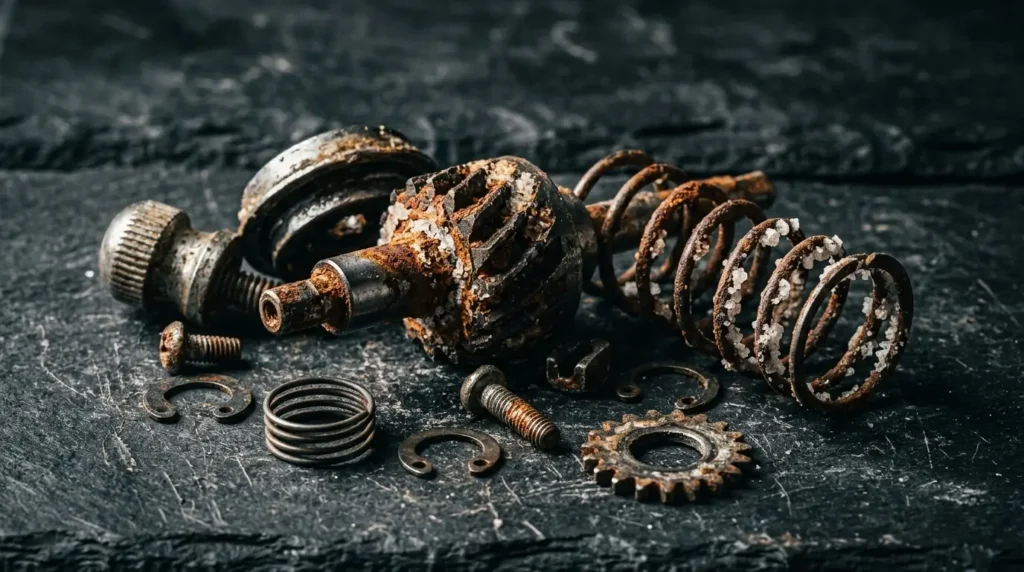
- Steel mechanisms built and sold only for pepper. The Unicorn Magnum Plus, for example, is a well-regarded pepper mill with an oversized steel mechanism, but the company doesn’t sell a matching salt version of it — steel mechanisms in general hold up worse against the corrosion salt causes over time than the ceramic ones built for the job.
- Mills that won’t state the mechanism material. If a listing doesn’t say what the grinding mechanism is made of, assume it’s a cheap alloy that won’t last.
- Sealed, non-refillable units, past the trial stage. Fine for a first attempt, expensive as a permanent habit.
- A single fixed grind setting. Part of the appeal of Himalayan pink salt is the crunch of a coarse finishing grind and the control of a fine one; a mill that can’t do both defeats the purpose.
- Dishwashing a mechanism the manufacturer says to keep dry. Most brands say to wipe the mechanism with a barely damp cloth, not submerge it, because trapped water reintroduces the exact moisture problem the ceramic was supposed to solve.
Quick Answers Before You Buy
Only if the manufacturer states the mechanism is rated for salt. Most standalone pepper mills use carbon or stainless steel optimized for cracking peppercorns, and salt’s moisture and chloride content will corrode that mechanism faster than pepper ever would. Check the listing for the words “salt” or “ceramic” specifically before repurposing a pepper mill.
Yes. A coarse grind holds its crunch and visual appeal as a finishing salt on steak or roasted vegetables, while a fine grind dissolves faster and works better in doughs, brines, or anywhere you’re measuring by volume. Our guide to fine versus coarse pink salt covers when each one earns its place on the table.
Wipe the exterior with a barely damp cloth and dry it right away. Keep water out of the mechanism itself. Even a corrosion-resistant ceramic core sits inside a housing that can trap moisture and eventually rust from the metal parts around it, not the ceramic itself.
Only if you’re seasoning one-handed regularly, sharing a table where guests will use it, or dealing with a grip issue that makes twisting uncomfortable. For solo cooking at the stove, a manual mill is one less thing to charge or eventually replace.
Bottom Line
If you want one answer: buy a mill with a ceramic mechanism built specifically for salt, not a repurposed pepper grinder, and match the grind range to how you actually cook. For most kitchens, that means the Cole & Mason Precision+ salt mill. For steak nights and finishing salt at volume, the HexClad HexMill’s ten-setting range earns its higher price. Skip anything that won’t tell you what its mechanism is made of, and once your new mill arrives, our guide on how to grind pink salt covers which setting to use for steak, roasting, baking, and finishing.