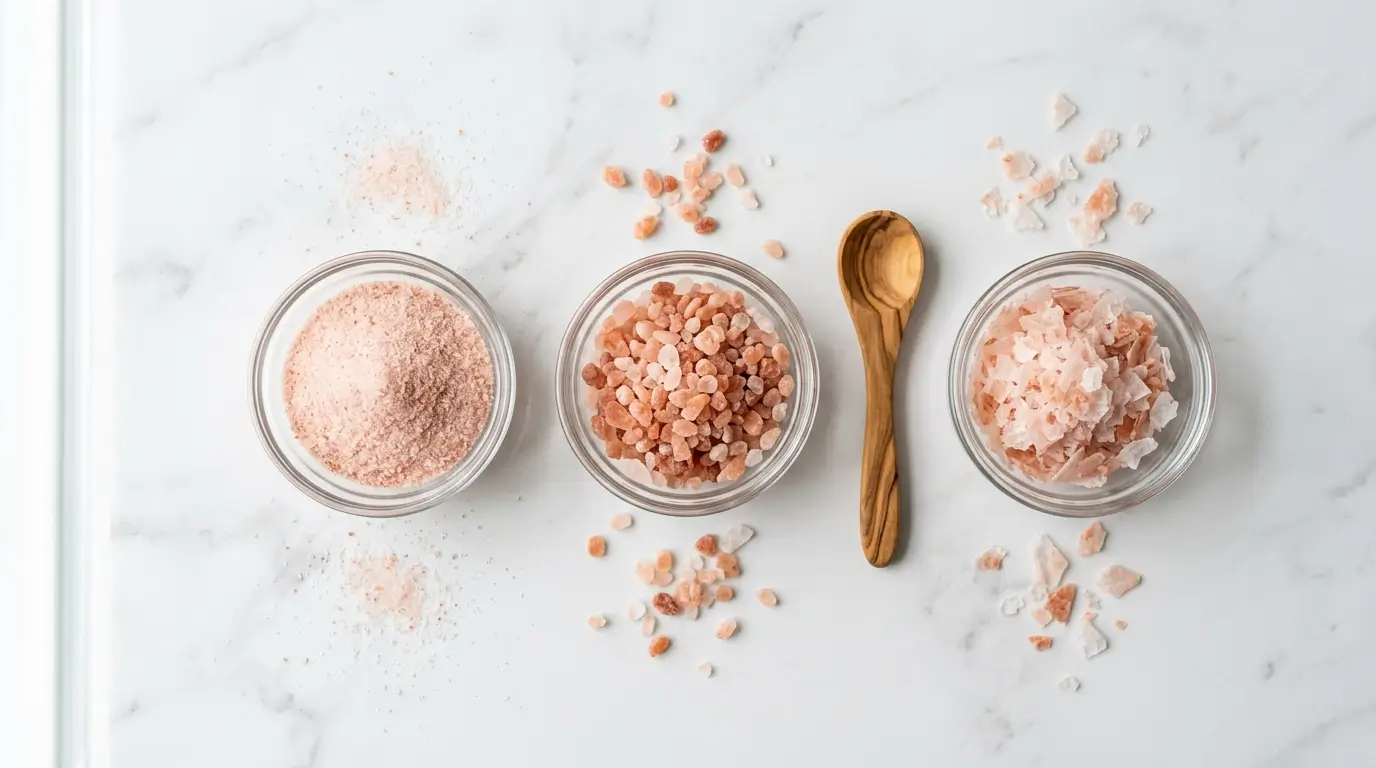
Himalayan pink salt is one of the most widely searched grocery items on the internet — and also one of the most inconsistent products on store shelves. Grain size varies wildly between brands, color ranges from pale blush to deep rose, sourcing claims are rarely verified, and the price per ounce swings by a factor of six for what is ostensibly the same product.
We spent three weeks testing seven of the most widely available Himalayan pink salt brands, evaluating each for color consistency, grain size, taste, label transparency, and value per ounce. Below is what actually separates a well-sourced, properly milled Himalayan salt from the generic stuff — and exactly which brands are worth buying in 2026.
Not sure what makes Himalayan pink salt different from other salts, or where it actually comes from? Our complete guide to Himalayan pink salt covers the geology, sourcing, and mineral profile in full before you commit to a brand.
How We Tested
Every brand in this guide was purchased at retail price and evaluated across five criteria.
Color consistency. Authentic Himalayan pink salt shows natural color variation within the same bag — some crystals are pale blush, others deeper rose, with the occasional off-white or translucent crystal. Suspiciously uniform color (every crystal an identical shade of hot pink) is the clearest sign of artificially dyed salt. We examined each brand under neutral daylight and noted how natural or artificial the palette looked.
Grain size and texture. We measured average crystal size, checked for fines and dust (which scorch in a hot pan before larger crystals dissolve), and tested how cleanly each coarse variety loaded into a standard ceramic burr grinder without jamming or caking.
Blind taste test. Three home cooks participated in two formats: a dissolved comparison (equal weight of salt in equal volume of still water, tasted side-by-side) and a finishing salt test on plain scrambled eggs. Tasters noted saltiness intensity, finish, and any metallic aftertaste.
Label transparency. We checked for country of origin, mine source, processing location, grain size, and any third-party certifications. Brands that omit sourcing details score lower — not because omission proves fraud, but because transparency is a reasonable baseline for a premium product.
Value per ounce. Prices were verified across Amazon, major grocery retailers, and brand websites in June 2026. We compare cost per ounce to control for different bag sizes.
The 7 Brands at a Glance
| Brand | Available Grain Sizes | Price/oz (approx.) | Color Quality | Score |
|---|---|---|---|---|
| SaltWorks Pure Ocean | Fine, Coarse, Extra Coarse | ~$0.19 | Natural variation ✓✓ | ★★★★★ |
| Kirkland Signature | Coarse | ~$0.06 | Natural variation ✓ | ★★★★☆ |
| Himalayan Chef | Coarse | ~$0.15 | Natural variation ✓ | ★★★★☆ |
| The Spice Lab | Fine | ~$0.22 | Natural variation ✓ | ★★★★☆ |
| Sherpa Pink (SF Salt Co.) | Coarse + Flakes | ~$0.35 | Excellent ✓✓ | ★★★★★ |
| BetterBody Foods | Fine + Coarse | ~$0.12 | Good ✓ | ★★★★☆ |
| McCormick | Fine | ~$0.28 | Moderate | ★★★☆☆ |
Best Overall: SaltWorks Pure Ocean Himalayan Pink Salt

SaltWorks is the closest thing the Himalayan pink salt market has to a reference standard. The company operates its own processing facility in the United States, publishes a detailed origin statement and mineral analysis on request, and offers multiple grain sizes — all from the same Khewra-sourced material.
In our taste test, SaltWorks produced the cleanest result in the dissolved comparison: well-balanced saltiness, no metallic edge, and a finish that faded cleanly rather than lingering. On eggs, the coarse variety provided a satisfying crunch that held for several seconds before dissolving, delivering a burst of flavor rather than a flat, immediate hit.
Color across the bag was genuinely varied: pale blush, dusty rose, and deeper terracotta crystals mixed naturally without any appearance of dye. Fines were minimal. The coarse grind loaded smoothly into two different ceramic grinders without bridging.
At approximately $0.19 per ounce for a 5-pound bag, SaltWorks is not the cheapest option here — but it is the most complete. Multiple grain sizes from a single traceable source, honest labeling, and consistent quality make it the best himalayan pink salt for cooks who care about what they’re buying.
Pros: Multiple grain sizes from one source, honest and detailed labeling, excellent color variation, clean flavor, low fines. Cons: Primarily an online purchase — limited brick-and-mortar availability. Best for: Home cooks who want a reliable, multi-format pink salt from a genuinely transparent brand.
Best Budget: Kirkland Signature Himalayan Pink Salt
The 5-pound Kirkland coarse grinder jug is the most cost-effective Himalayan pink salt on the market, at roughly $0.06 per ounce — less than one-third the cost of most mid-tier brands. For high-volume everyday use (boiling pasta water, building brines, refilling a tabletop grinder), the value is genuinely difficult to argue with.
Color is natural and appropriately varied. The coarse grain is consistent and loads into a ceramic grinder cleanly. In a blind taste test, Kirkland was indistinguishable from brands costing three times as much when dissolved into water. Country of origin (Pakistan) is listed on the label.
The main limitation is format: one size, one grain (coarse), and only available at Costco or Costco.com. If you go through a grinder jug every few months and shop at Costco anyway, this is the obvious pick. For a full breakdown — including mineral label analysis and a side-by-side against boutique brands — see our Kirkland Himalayan Pink Salt review.
Pros: Exceptional value per ounce, clean flavor, natural color, reliable coarse grind, honest labeling. Cons: Costco membership required; single grain size only; large jug format is impractical for occasional use. Best for: High-frequency cooks, families, or anyone who regularly fills a countertop grinder and shops at Costco.
Best Coarse: Himalayan Chef Coarse Pink Salt
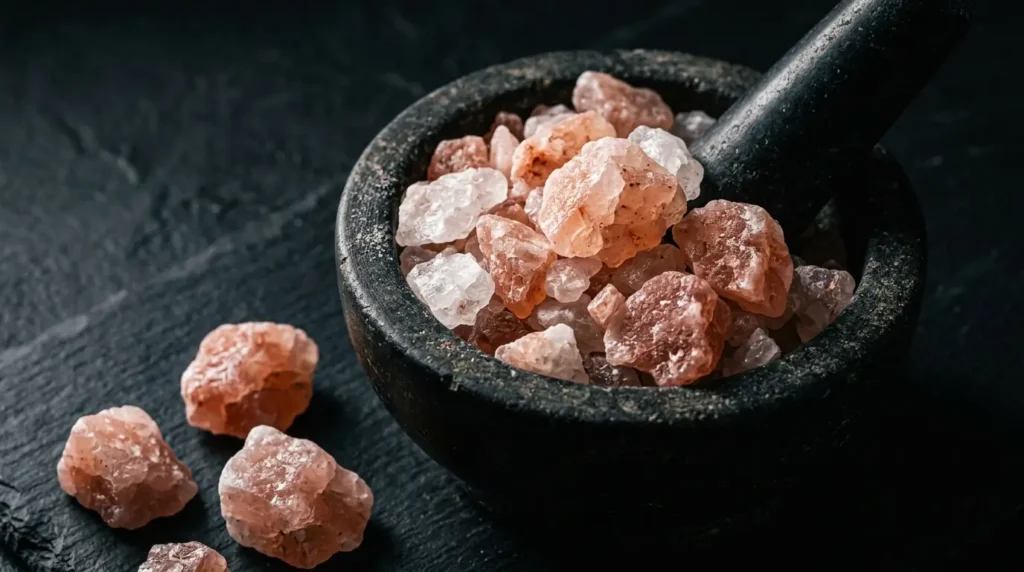
Not all “coarse” Himalayan salts are created equal. Many brands label a medium grind as coarse. Himalayan Chef’s coarse variety is the exception: crystals are genuinely large and irregular, with the kind of texture that makes a difference in dry rubs and brines and looks striking as a finishing salt on a platter.
We found minimal fines in a 2-pound bag — important when using salt in a brine, where excess powder clouds the liquid before the crystals dissolve. The color was naturally varied, the flavor was clean with no bitterness, and the grain loaded well into larger-aperture grinders.
At around $0.15 per ounce, Himalayan Chef sits between budget and premium, with genuinely coarse quality closer to the top. The label lists Pakistan as source country. The one gap is the absence of third-party testing documentation, which better brands now include.
Pros: Genuinely coarse crystals, low fines, clean flavor, good availability on Amazon, natural color. Cons: No third-party purity testing cited; sourcing is listed but not deeply documented. Best for: Dry rubs, brines, salt blocks, curing applications, and anywhere a large, irregular crystal is the point.
Best Fine: The Spice Lab Himalayan Pink Salt (Fine)
Fine-grain pink salt serves a completely different purpose from coarse. In baked goods, spice rubs, and any dish where the salt needs to distribute evenly or dissolve fully, coarse crystals underperform — they don’t fully dissolve into batters, and they can create hot spots of saltiness. The Spice Lab’s fine Himalayan pink salt is the most consistent fine grind we tested.
The crystals were free of visible lumps, measured predictably by volume across repeated tests, and dissolved cleanly in room-temperature water without leaving residue. In the taste test, it ranked second overall — slightly behind SaltWorks — but ahead of every other fine grind tested.
One practical note that matters: fine pink salt is denser than coarse by volume and behaves differently from fine table salt. The Spice Lab includes a conversion chart on their website, which is genuinely useful and a signal of careful product development. For the full substitution ratios and when to use fine versus coarse, see our fine vs. coarse pink salt guide.
At $0.22 per ounce, it’s a mid-range price for above-average consistency.
Pros: Highly consistent grind, lump-free, predictable by volume, clean dissolution, good conversion guidance. Cons: Slightly higher price than comparable competitors; only available in fine (no coarse option). Best for: Baking, seasoning spice blends, rubs, or any recipe that calls for fine salt and even distribution.
Best Finishing Flakes: Sherpa Pink by San Francisco Salt Company
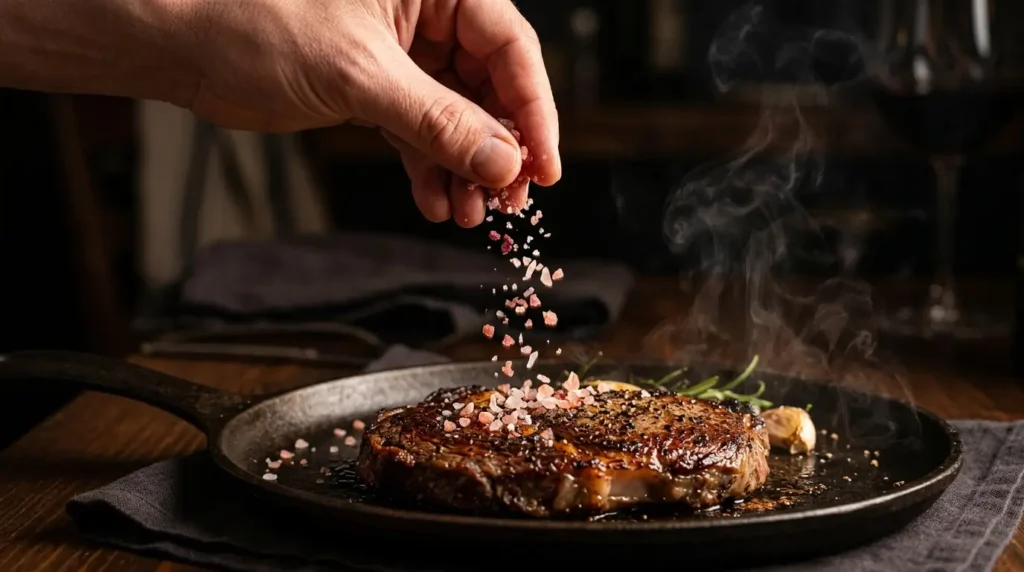
Finishing flakes are a different product category from coarse or fine grind. Rather than dissolving during cooking, they’re applied at the end — on a steak just before it leaves the pan, on a scoop of ice cream, or on the surface of dark chocolate. The point is texture, visual contrast, and a clean burst of saltiness on the palate.
Sherpa Pink from San Francisco Salt Company is the best finishing-flake Himalayan salt we tested. The company sources directly from the Khewra mine and produces a flaked format: thin, irregularly shaped crystals that dissolve almost on contact with warm food and cling to surfaces rather than rolling off. On our egg test, Sherpa Pink flakes were the clear winner — visually striking, lightly crunchy, and texturally distinct from coarse grind.
The color variation in this product was the best of any brand we tested: deep rose crystals alongside pale blush, with the kind of natural complexity that coarser grinds don’t always show. At $0.35 per ounce it’s the most expensive pick in this guide — but finishing salt is used in small pinches, which makes the real per-use cost trivial.
For a practical guide on when finishing flakes actually improve a dish (and when they don’t), see our pink salt finishing flakes guide.
Pros: Genuine flaked texture, exceptional color, clean dissolution, premium finish for plating and desserts, traceable sourcing. Cons: Highest price per ounce; not appropriate for everyday cooking or grinding. Best for: Finishing steaks, chocolate, caramel desserts, cheese plates, or any dish where visible, dissolving crystals are part of the presentation.
Best Everyday Value: BetterBody Foods Himalayan Pink Salt
BetterBody Foods is the most common choice in the $10–15 price range on Amazon, and for good reason. Both the fine and coarse varieties are consistently ground, the color is natural without signs of dye, and the label lists Pakistan as the country of origin. It performs solidly across all our criteria without excelling in any single one.
If you cook pink salt into your food rather than finishing with it — adding it to soups, braises, pasta water, or general seasoning — this is a sensible default. It’s widely available, ships without quality issues, and the price per ounce ($0.12) is reasonable for what you get.
Pros: Widely available, consistent quality, reasonable price, both fine and coarse options, honest labeling. Cons: Nothing distinctive — reliable but does not lead in any category. Best for: Everyday cooking, beginners exploring Himalayan salt, or anyone who wants a mid-range default without committing to bulk.
What to Avoid
Uniformly colored crystals. Authentic Himalayan pink salt varies in color from batch to batch and within the same bag. If every crystal is exactly the same shade of bright pink, the salt has almost certainly been dyed — usually with iron oxide or food coloring. Dyed salt is not genuine Himalayan salt, regardless of what the label claims. Full authentication guidance is in our guide to spotting fake Himalayan pink salt.
No country of origin listed. Genuine Himalayan pink salt comes from Pakistan — specifically the Khewra mine in Punjab province. Any brand that doesn’t list its source country on the label is omitting the most basic piece of provenance information. That omission is almost never accidental.
Unusually low prices on small bags. A 1-pound bag of Himalayan pink salt under $2 is almost certainly not authentic. Properly sourced, processed, and shipped Himalayan salt has a cost floor that makes deep discounts on small bags economically implausible.
Grain size inconsistency or excessive dust. Open the bag or grinder and look. A legitimate coarse grind is irregular but similar in size. Excessive powder or dust is a sign of poor processing — and dust burns before crystals dissolve in a hot pan.
Buying Checklist
Before adding any Himalayan pink salt to your cart, run through these checks:
- Fine, coarse, or flakes? Coarse for grinding and finishing. Fine for baking, rubs, and even seasoning. Flakes for finishing presentations. If you’re filling a grinder, see our best pink salt grinder guide for grain-size compatibility.
- Is Pakistan listed as the country of origin? No Pakistan on the label = not authentic Himalayan.
- Does the color look naturally varied? Some variation in crystal color is what authenticity looks like. Uniform color is a red flag.
- Price per ounce under $0.05 for a small bag? Warrants skepticism — run the per-ounce math before assuming value.
- Does the brand publish sourcing details? Not all do. The ones that don’t aren’t necessarily fraudulent — but the ones that do have earned more trust.